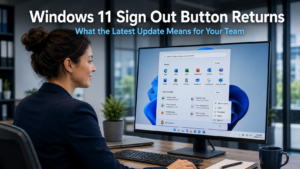
The Windows 11 sign out button has been a source of frustration for many business users over recent months. Microsoft made changes to the Start menu that moved the sign out option behind an additional click, leaving teams confused and slowing down a task most people do without thinking. Microsoft has now listened to that feedback and is testing an update to restore the button to its original position. For businesses with shared devices or multiple user accounts, this is a welcome change.
What Happened to the Windows 11 Sign Out Button
Microsoft periodically updates the Windows 11 interface with the aim of making it cleaner and more organised. One recent change involved grouping related settings together in the Start menu. The intention was to reduce clutter. However, the change also buried the sign out option inside a three-dot overflow menu, making it harder to find than before.
The reaction from users was swift. For anyone who regularly switches between accounts on a shared computer, or who signs out at the end of a working session as a matter of habit, the extra step was more than a minor inconvenience. It broke a well-established routine and created unnecessary friction in what should be a simple action.
Microsoft monitored the feedback and responded. The company is now testing an update that returns the Windows 11 sign out button to the position users expect it to be in, directly accessible from the Start menu without navigating through additional menus.
Why the Windows 11 Sign Out Button Matters for Business Teams
For businesses with a single user per device, the change may feel minor. However, many workplaces do not operate that way. Shared computers in reception areas, meeting rooms, or workshop environments are common. Multiple team members accessing the same machine at different points throughout the day need to sign in and out smoothly.
When signing out becomes harder than expected, staff tend to leave accounts open rather than log out properly. This creates a security risk. An account left signed in on a shared device means the next person to use the machine can access the previous user’s files, emails, and applications without any authentication.
Restoring the Windows 11 sign out button to a prominent position makes it more likely that staff will use it consistently. Small interface decisions like this have a real effect on security behaviour across a team, particularly where shared devices are involved.
Our article on old staff logins and account security explores how overlooked account access creates risk across businesses of all sizes.
What Else the Windows 11 Update Includes
The restoration of the sign out button forms part of a broader Windows 11 update currently in testing. Several other changes are included alongside it.
Media controls are coming to the lock screen. When your computer is locked but playing music or a video, playback controls will appear directly on the lock screen. This means staff can pause, skip, or adjust audio without needing to unlock the device first. For teams using background music in the office or listening to recorded calls, this is a small but practical addition.
File sharing from search results is also being introduced. Rather than locating a file, opening its folder, and then sharing it from there, users will be able to share files directly from the Windows search interface. This reduces the number of steps involved in a common task and saves time throughout the working day.
Together, these changes reflect Microsoft’s ongoing effort to improve the Windows 11 experience based on how people actually use the operating system. For businesses across Eastbourne and the wider Sussex area, updates like these are a reminder of the practical value that comes with keeping devices on a supported, up-to-date operating system.
Windows 11 Updates and the Broader Case for Upgrading
This update also serves as a useful prompt for businesses still running Windows 10. Each Windows 11 update adds improvements and refinements that Windows 10 users do not receive. Meanwhile, the deadline for free Windows 10 support draws closer, with Microsoft ending security updates in October 2025.
Businesses that have already made the move to Windows 11 benefit from each successive update automatically. Those still on Windows 10 are not only missing out on productivity improvements but are also approaching a point where their devices will no longer receive security patches.
Our article on the Windows 11 upgrade covers the full business case for making the switch before the October 2025 deadline.
What This Means For Businesses
The return of the Windows 11 sign out button is a small but instructive example of how interface changes affect workplace behaviour. What looks like a minor design decision can alter how staff interact with their devices day to day, with knock-on effects for security and efficiency.
For business owners and directors, the practical takeaway is straightforward. Keeping Windows 11 devices updated ensures your team benefits from improvements like this as they arrive. It also ensures that security patches reach every device consistently, which matters far more than any individual feature.
If your business manages multiple devices across a team, having a structured approach to updates is worth considering. Many businesses find that updates get delayed or missed when left to individuals. A managed IT provider applies updates automatically and consistently across every device, removing the risk of gaps in coverage. Our managed IT services handle this as part of ongoing device management for businesses across Sussex and the South East.
The Windows 11 update schedule also highlights the value of staying on a supported operating system. Businesses running Windows 10 will not receive improvements like these, and from October 2025 they will not receive security updates either. Planning ahead avoids a last-minute scramble.
Final Thoughts
The Windows 11 sign out button returning to its familiar location is a welcome fix for business users who found the change disruptive. It also illustrates something worth remembering: software companies do listen to feedback, and the operating system your team uses every day continues to improve over time.
Staying updated means your team works with the best available version of their tools. It means fewer frustrations, better security, and access to the small improvements that make the working day run more smoothly.
Microsoft made changes to the Start menu with the intention of grouping related settings together and reducing visual clutter. The sign out option was moved into a secondary menu as part of this reorganisation. However, user feedback made clear that the change created more confusion than it solved, and Microsoft responded by restoring it to its original location.
The update is currently in testing. Microsoft typically rolls out tested updates progressively to Windows 11 devices through the standard Windows Update process. Most business devices with automatic updates enabled should receive the change without any manual action required. Your IT administrator can check the update status through the Windows 11 settings.
For individual users on their own devices, the position is a minor convenience. For teams using shared computers, it matters more. When signing out feels harder than expected, staff are more likely to leave accounts logged in. This creates a security risk on shared devices, as subsequent users can access the previous person’s files and applications without authentication.
In most cases, no action is required. The update arrives through the standard Windows Update process for devices running Windows 11. If your devices are configured to receive updates automatically, the change will apply without intervention. If updates are managed centrally by an IT provider, they will handle the rollout as part of their normal schedule.
Alongside the sign out button fix, the update includes media controls on the lock screen and the ability to share files directly from Windows search results. Both changes reduce the number of steps needed to complete common tasks, making day-to-day work slightly faster and more straightforward for your team.