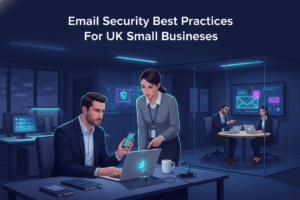
Email security best practices are no longer a nice to have for UK small businesses. Most successful cyber attacks still begin with a single email, and it only takes one mistake to cause real disruption.
Why email security matters for small businesses
For many owners in places like Brighton, Crawley or Eastbourne, email is the main way you speak to customers and suppliers. That also makes it a prime target for criminals.
If an attacker gets into a mailbox they can:
- Send fake invoices that look genuine
- Reset passwords for other systems
- Steal sensitive information about staff and clients
- Use your domain to send spam or phishing to others
The good news is that clear email security best practices can reduce this risk without making everyday work painful.
Recognising phishing and scam emails
Phishing is when someone sends an email that looks real but is designed to trick you into clicking a link, opening an attachment, or sharing information.
Common warning signs include:
- Pressure and urgency such as “pay this today or we will close your account”
- Spelling mistakes or odd wording in what should be a professional message
- Sender addresses that are nearly right but not exact
- Unexpected attachments, especially ZIP or Office files asking you to enable content
- Links that do not match the visible text when you hover over them
Make it normal for staff to slow down and check before they click. A short pause is cheaper than a data breach.
For a deeper look at phishing and how it works you can read our guide What every small business should know about phishing.
Core email security best practices for your business
You do not need to be technical to put sensible controls in place. Focus on a few key areas and keep improving over time.
Use strong passwords and multi factor authentication
Every mailbox should have:
- A unique, long password that is not reused on other sites
- Multi factor authentication such as a phone prompt or code
This makes it much harder for criminals to log in even if a password leaks in a data breach.
Keep software and devices up to date
Attackers often use old software flaws to get in. Make sure:
- Windows and macOS updates are installed regularly
- Email apps such as Outlook are kept current
- Phones and tablets used for work email are updated too
If you are unsure why updates matter, this article explains more about keeping Windows current for business use: Why update Windows if it is not broken.
Turn on modern spam and malware filtering
Most cloud email systems such as Microsoft 365 and Google Workspace include built in filtering. Ask whoever manages your IT to:
- Enable advanced spam and phishing protection
- Block known dangerous file types
- Quarantine suspicious messages for review
These filters will not catch everything, but they remove a large number of bad emails before staff ever see them.
Control who can send as your domain
Technical records such as SPF, DKIM and DMARC tell receiving mail servers which systems are allowed to send email on behalf of your domain.
Configured correctly they help:
- Reduce spoofed emails that pretend to be from your business
- Improve the chances of your genuine emails reaching inboxes
Your IT provider or email host can set these up. It is a one off job that supports your wider email security best practices.
Training your team to handle email safely
Technology helps, but people still make the final decision to click or not. A simple training plan can make a big difference.
Keep guidance short and practical
Avoid long policy documents that nobody reads. Instead, share clear rules such as:
- Never send passwords or bank details by email
- Always double check changes to payment details by phone using a known number
- Ask a colleague or manager if an email feels odd
Refresh this guidance every few months and whenever you see a new type of scam targeting your sector.
Run simple awareness exercises
You can run light touch exercises without blaming anyone. For example:
- Share screenshots of real phishing attempts your business has received
- Ask staff to point out the warning signs
- Discuss what they would do if they clicked by mistake
This helps people feel confident about speaking up early rather than hiding an error.
Protecting sensitive information in email
Not every message is equal. Payment details, contracts, staff records and customer data all need extra care.
Consider these steps:
- Use secure links rather than attachments for very sensitive files
- Limit who can see shared mailboxes that handle finance or HR queries
- Set up automatic rules to add disclaimers where needed
- Back up your email data so you can recover quickly after an incident
If you are unsure about backup options, this guide explains the basics in plain language: How to back up my business data.
What to do if someone clicks on a bad email
Even with good email security best practices in place, mistakes will happen. The aim is to limit the damage.
If you think someone has clicked on a malicious link or opened a risky attachment:
- Ask them to tell you or your IT contact immediately
- Change their email and key system passwords straight away
- Sign them out of all sessions if your system allows it
- Run a full antivirus and anti malware scan on the device
- Warn colleagues and, if needed, key customers that an account may have been misused
For serious incidents or suspected data loss, the National Cyber Security Centre has clear guidance for UK organisations on handling cyber incidents. You can find it on the NCSC small business guide.
Building email security into everyday work
Email security is not a one off project. It is a set of habits and controls that you review regularly.
A simple checklist to revisit every quarter might include:
- Are all staff using multi factor authentication
- Have any new starters or leavers been handled correctly in the email system
- Are devices up to date and protected
- Have we seen any new phishing patterns
- Do we need a short refresher session for the team
How My Tech Team can help
If you would like help reviewing your email security best practices or setting up safer systems for your business in Brighton, Crawley or nearby areas, support is available.
You can book a short, no obligation chat to talk through your current setup and your concerns. Together we can look at practical steps that fit your size and budget.
Schedule a 30 minute call to get started.