Ransomware Recovery Scams: When the Rescuer Is the Attacker
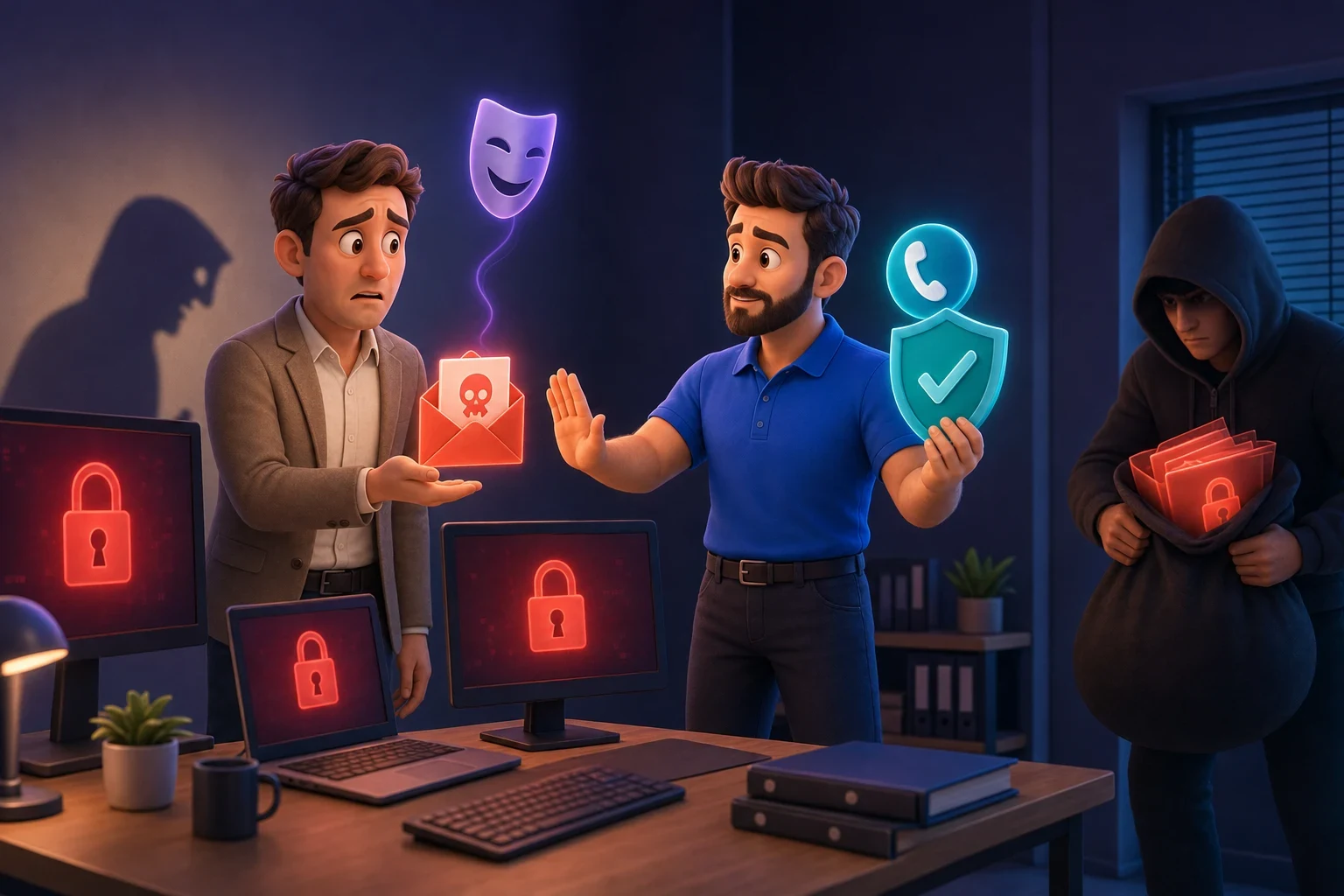
Imagine the worst morning of your working life. Your files are locked, a ransom note is on every screen, and the criminals say they’ve copied your customer data and will publish it unless you pay. Then, while you’re still working out what’s happened, an email arrives from a company offering to help. They say they’ve broken into the criminals’ systems and, for a fee, they can delete your stolen data.
It sounds like a lifeline. In at least some cases, it’s the same criminals coming back for a second payment.
The “Ransom Busters” case
In August 2026, researchers at the US security firm GuidePoint Security described a group calling itself “Ransom Busters”. It contacted businesses that had just been hit by ransomware, claiming it had found weaknesses in the gangs’ own systems that gave it access to stolen data and unlock keys. It offered to delete the stolen data for between $20,000 and $60,000.
Two things made the researchers suspicious:
- The timing. Some victims were contacted before anyone outside the business knew about the attack. A genuine third party would have no way of knowing.
- The fingerprints. In two of the attacks, the ransomware criminals and “Ransom Busters” used the same tools, the same password on a hidden account and the same computer name.
The researchers concluded, with moderate confidence, that Ransom Busters was most likely a single criminal working with the ransomware gangs, trying to take a second payment from victims. They advised victims not to pay. A ransomware negotiation firm, Coveware, said it had seen the same group contact one of its clients too.
This isn’t completely new. Fake “data recovery” firms have contacted ransomware victims for years, usually after the attack has been reported in the news. What’s new is the inside knowledge, which makes the offer far more convincing.
Why this scam works so well
Ransomware puts a business under huge pressure. You can’t work, customers are ringing, staff are worried and you may be facing data protection questions. In that state, anyone who sounds confident and offers to make the problem go away is going to get a hearing.
The criminals know this. Over the years ransomware has moved from simply locking files, to stealing data and threatening to publish it, to contacting customers and staff directly. Posing as the rescue team is just the latest way to add pressure and take more money.
Warning signs of a fake ransomware rescuer
Treat any unrequested offer of help during a cyber attack as suspicious. Be especially wary if:
- They contacted you first, rather than you finding them through someone you trust.
- They know details about the attack that haven’t been made public.
- They claim to have “hacked the hackers” or to have special access to the gang’s systems.
- They want payment quickly, especially in cryptocurrency.
- They can’t be verified. No real address, no named people, no track record you can check with anyone independent.
- They promise a guaranteed outcome, such as “your data will be permanently deleted”. Nobody can honestly promise that, because you can’t check what criminals have kept.
Don’t reply to them yourself, and don’t forward the message around the business. Pass it to whoever is handling your incident.
Who to call instead
The best protection against this scam is deciding who you’ll call before anything happens. If you’re searching online for help in the middle of an attack, you’re much more likely to end up with the wrong people.
In the UK, the trusted routes are:
- Your IT support provider, who should already know your systems and backups.
- The NCSC’s 24/7 live cyber attack line on 0300 123 2040, if an attack is happening now.
- Your cyber insurer’s incident line, if you have cover. Some policies expect you to use their approved responders, so check before calling anyone else.
- The Information Commissioner’s Office (ICO), if personal data may have been taken. You normally have 72 hours from finding out to report a serious breach.
Your IT provider can also help you deal with any contact from the attackers or so-called rescuers, so you’re not making big decisions alone.
Be just as wary of anyone who contacts you out of the blue claiming to be IT support. Criminals also use fake support calls to get ransomware onto computers in the first place, as we explain in why that support call could be a trap.
Get ready before it happens
A few things make a ransomware attack much easier to recover from, and much harder for scammers to exploit:
- Write a short incident plan. Who makes decisions, who you call, and how you contact staff if email is down. Our guide on how to create a cyber incident plan walks you through it.
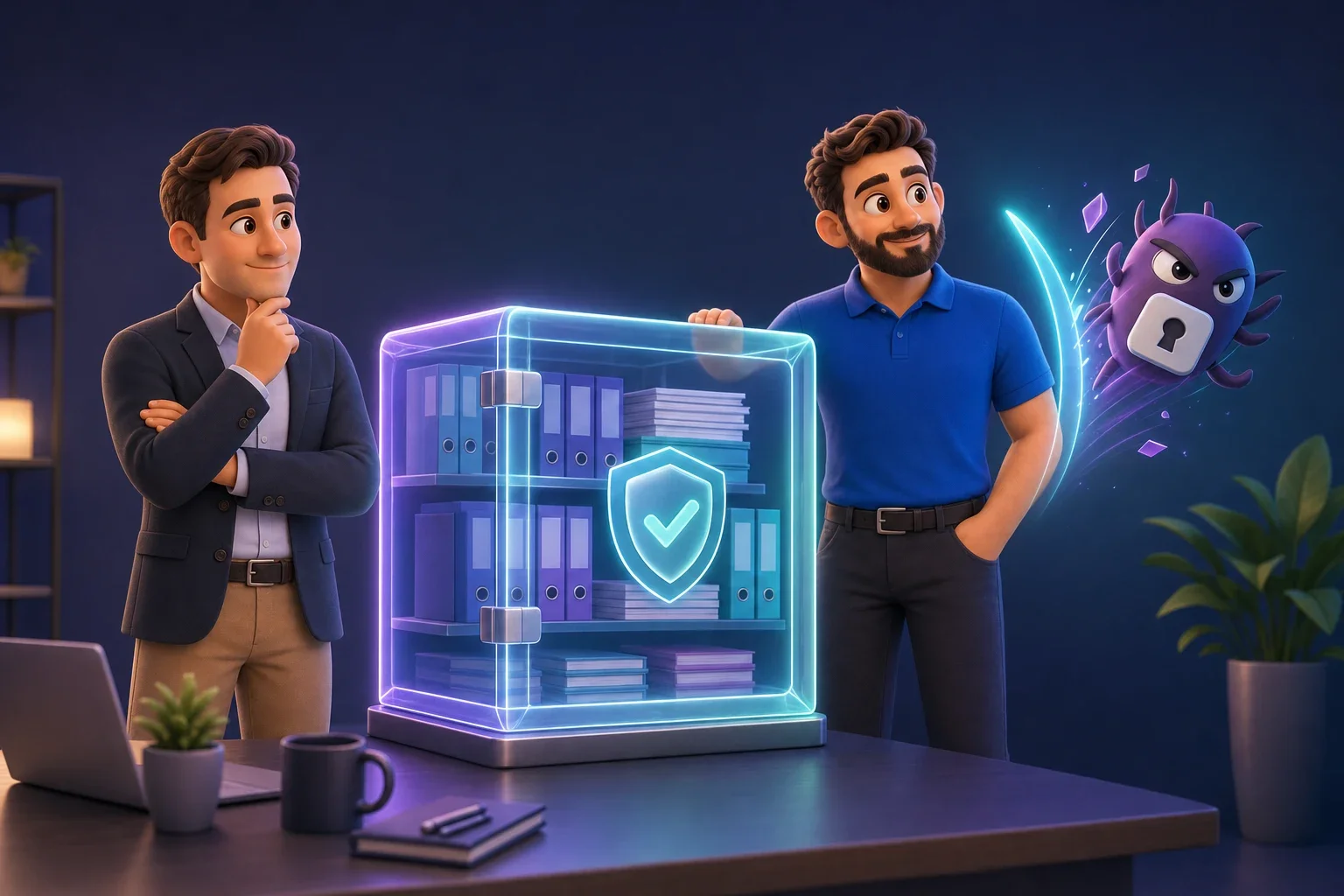
- Keep backups criminals can’t touch. Backups that can’t be changed or deleted, even by someone with an administrator password, mean you may not need anyone’s “help” to get your files back. See our article on immutable backup storage.
- Keep everything updated. Many ransomware attacks start with an old, unpatched weakness.
- Protect your accounts. Two-step sign-in on every account, especially email and remote access, closes the most common way in.
- Know your insurance. Find out now what your policy covers and who you’re meant to call.
If the worst does happen, our step-by-step guide on how to recover from a cyber attack covers the first hour, reporting and getting back to work safely.
How we help Sussex businesses prepare
For the businesses and charities we look after across Sussex and London, we’re the first call. Our fixed monthly fee includes backups of computers and Microsoft 365, round-the-clock security monitoring and an agreed plan for what happens if something goes wrong. That means nobody has to decide who to trust while their screens are showing a ransom note.
Need a hand?
If you’re not sure what you’d do if ransomware hit tomorrow, let’s fix that now. Our free Get It Green IT audit shows where you’re protected and where you’re exposed, with a clear red, amber and green report. Find out more about our cyber security service.
Book a free 30-minute call or IT audit and we’ll help you put a plan in place before you need one.