

Cyber Security Guides for Small Businesses


 Cyber Security
All Guides on This Topic
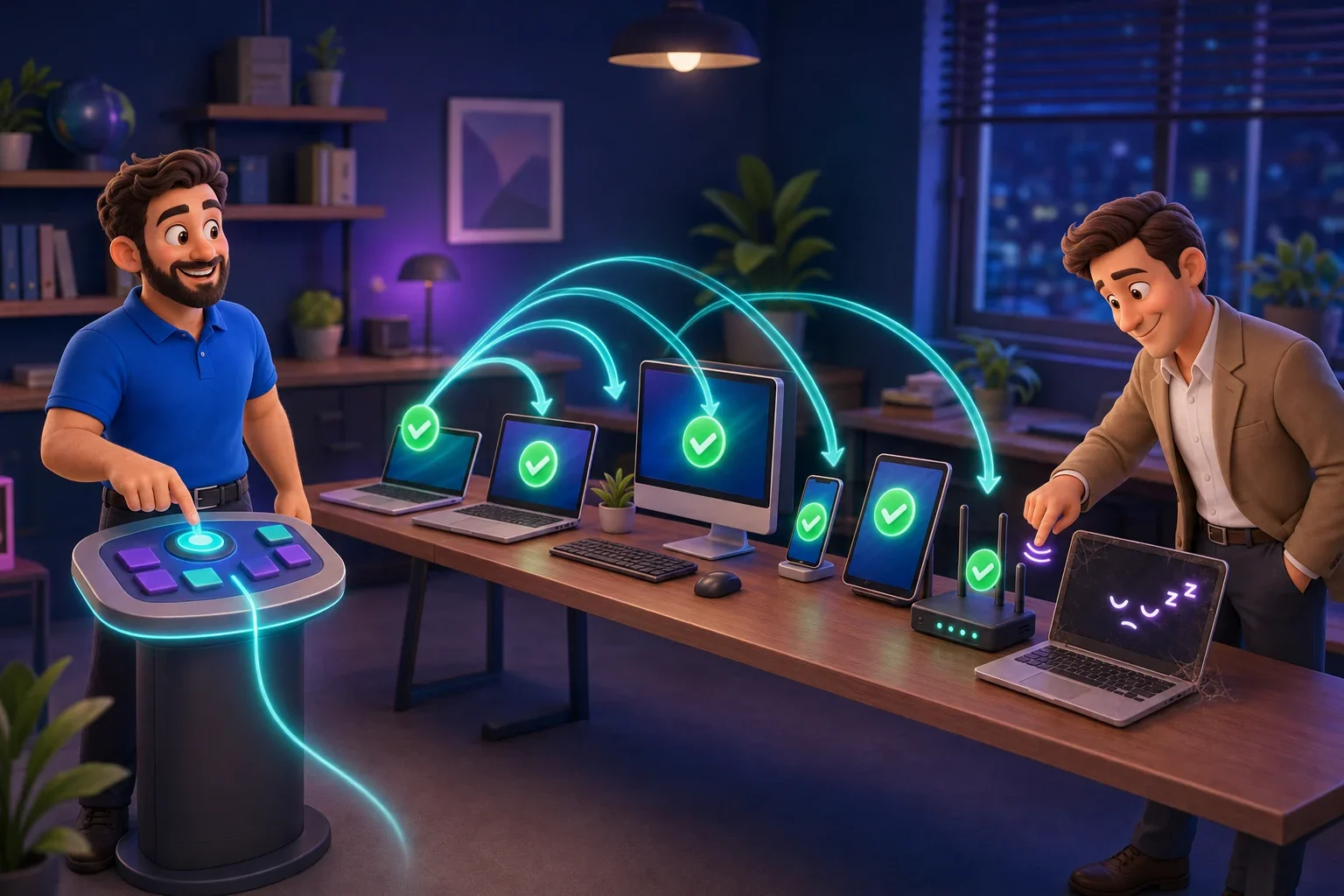
Patch Management for Small Businesses: A Plain-English Guide
Updates fix the weaknesses criminals use to get in. Here's how small businesses can make sure every device, app and router is updated quickly and reliably.
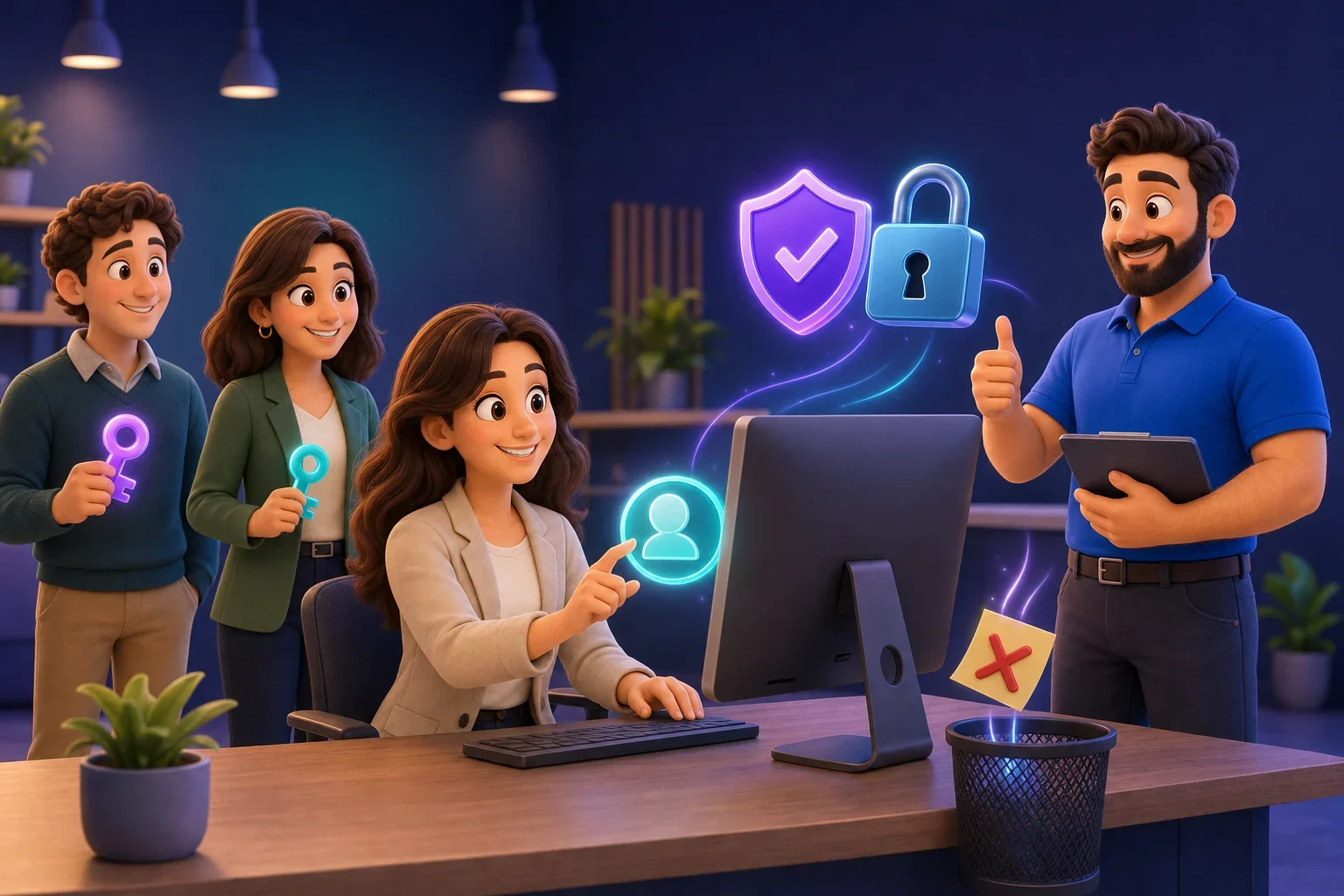
Shared Computers at Work: How to Keep Shared Devices Secure
The reception PC, the workshop computer, the care home tablet. Shared devices are everywhere in small businesses, and they are often the weakest spot. Here is how to keep them handy and secure.
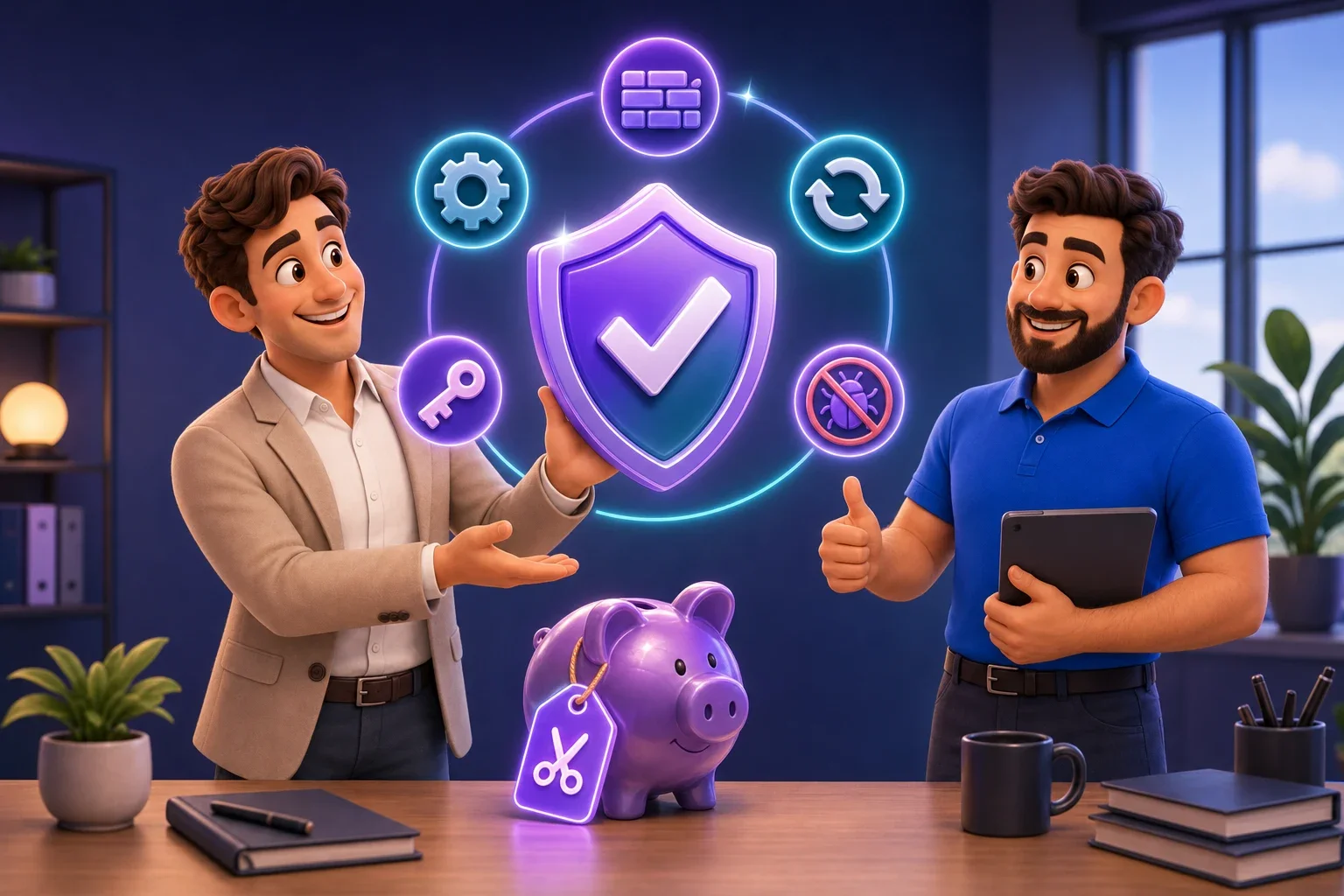
Cyber Essentials From £80: The New 75% Discount Explained
The government is paying 75% of the Cyber Essentials fee for small businesses that haven't been certified recently. Here is who qualifies, how to apply, and why the work matters more than the price.

NCSC Annual Review 2026: What It Means for Your Small Business
The UK's National Cyber Security Centre has published its yearly report. The headlines are about AI and national infrastructure, but the lessons for small businesses are simple, familiar and very fixable.
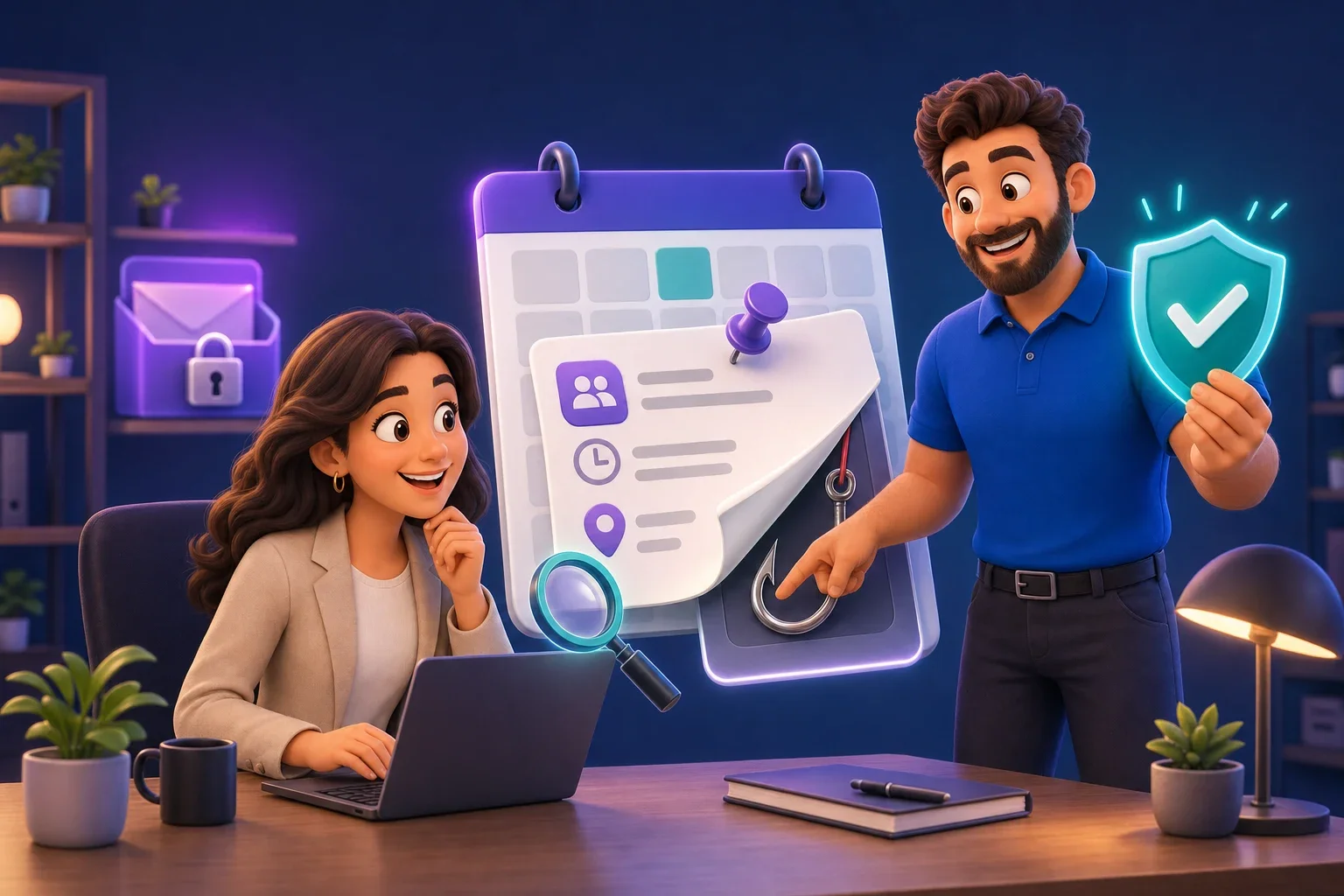
Fake Meeting Invites: The Calendar Scam Slipping Past Email Filters
Criminals are sending fake meeting invites in huge numbers, and the meeting can sit in your calendar even after the email has been caught. Here is how the scam works and how to protect your team.
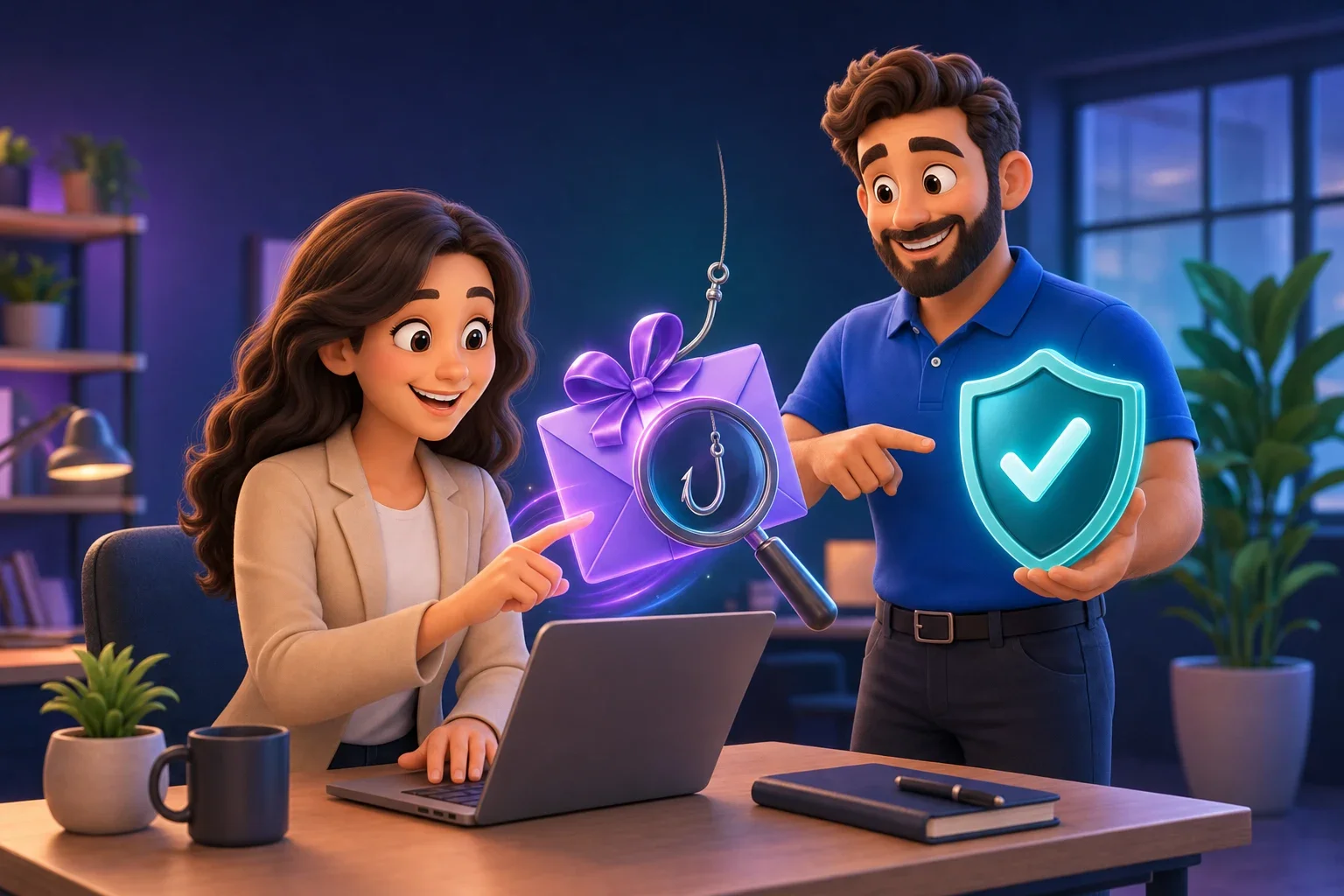
Fake Quote Request Emails: The Scam Aimed at Your Sales Team
A new enquiry asking for a quote is usually good news. Criminals know that, and fake quote request emails have risen twelvefold in a year. Here is how the scam works and how to keep your team safe without turning away real customers.
Email Encryption Solutions for Small Businesses
Email encryption solutions protect sensitive messages from the wrong eyes. Learn what small businesses need, how they work and how to choose the right fit.

PHP2Shell: The Critical PHP Vulnerability and What Your Business Should Do Now
Two critical flaws in PHP, the software behind most business websites, let attackers take over a web server without logging in. Here's what PHP2Shell means for your website and what to do today.
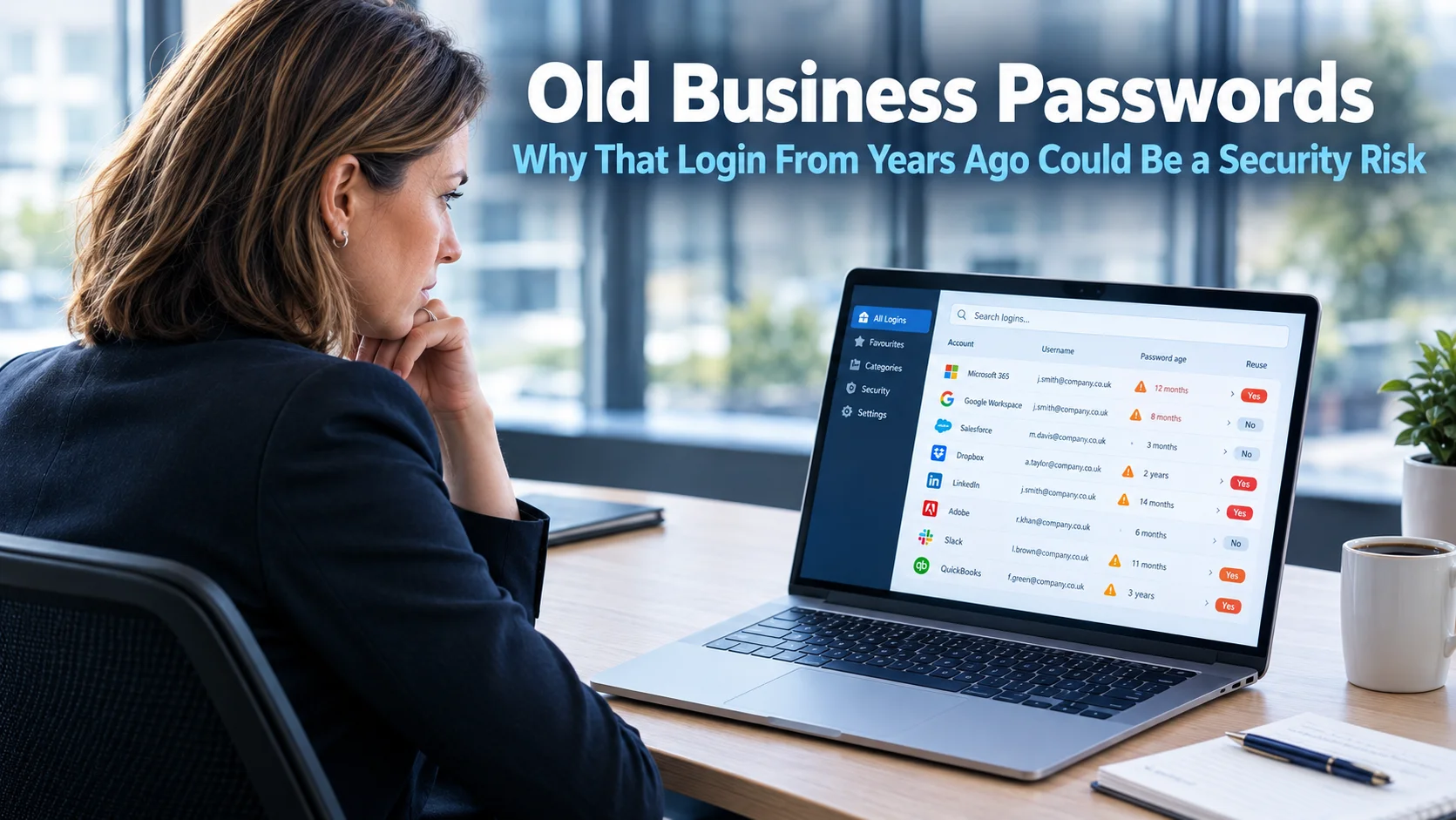
Old Business Passwords: Why That Login You Created Years Ago Could Be a Security Risk
Old business passwords are a risk that grows silently in every organisation. When was the last time you changed your passwords? For most people in most businesses, the honest answer is that they cannot remember, or that it was when they were last forced to. That is entirely understandable. It is also a meaningful security…
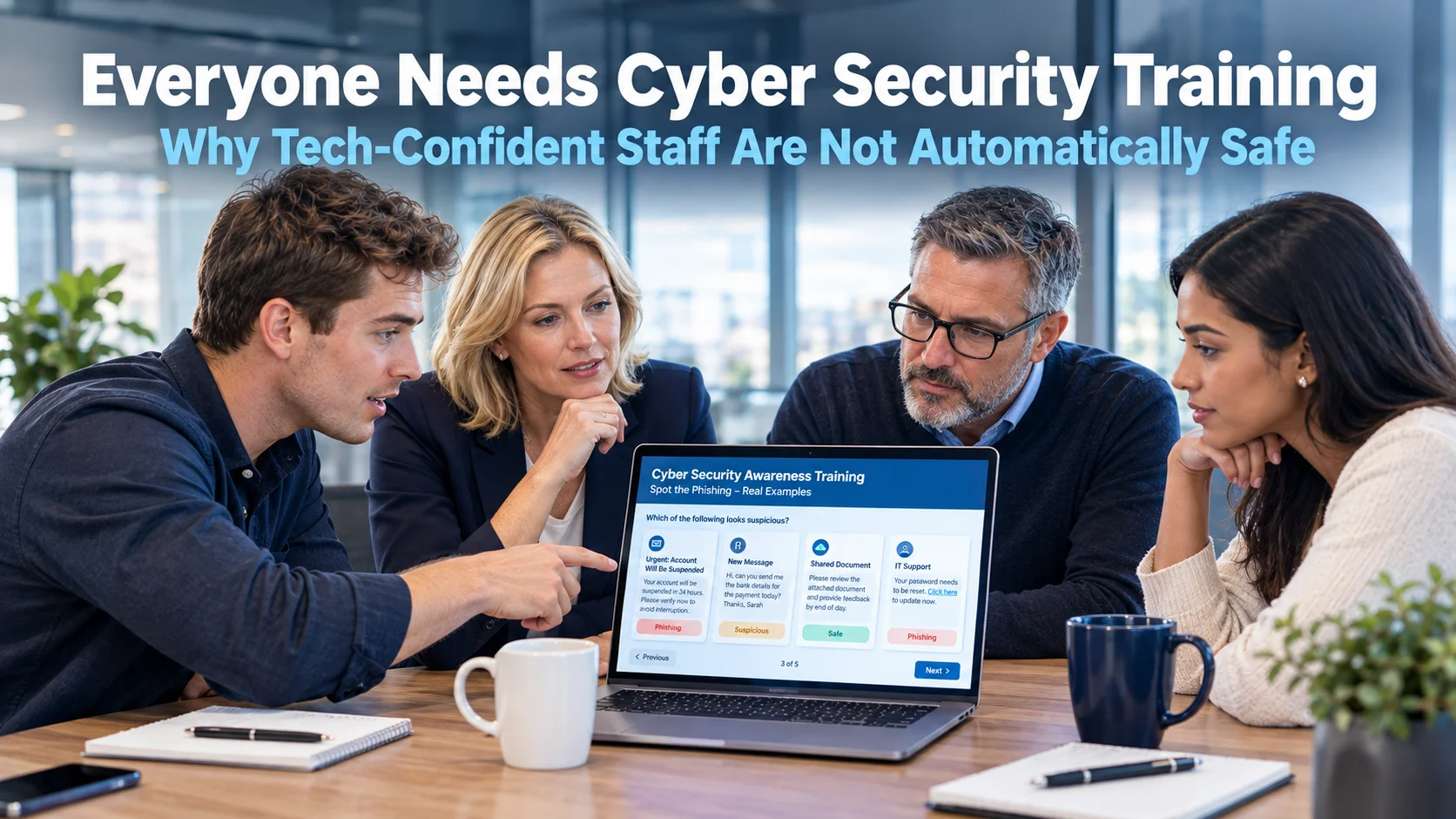
Everyone Needs Cyber Security Training: Why Tech-Confident Staff Are Not Automatically Safe
Cyber security training is something every member of a business team needs, regardless of how comfortable they are with technology. There is a widespread assumption that younger employees, those who have grown up with smartphones and social media and who navigate digital tools without a second thought, do not need much help staying safe online.…
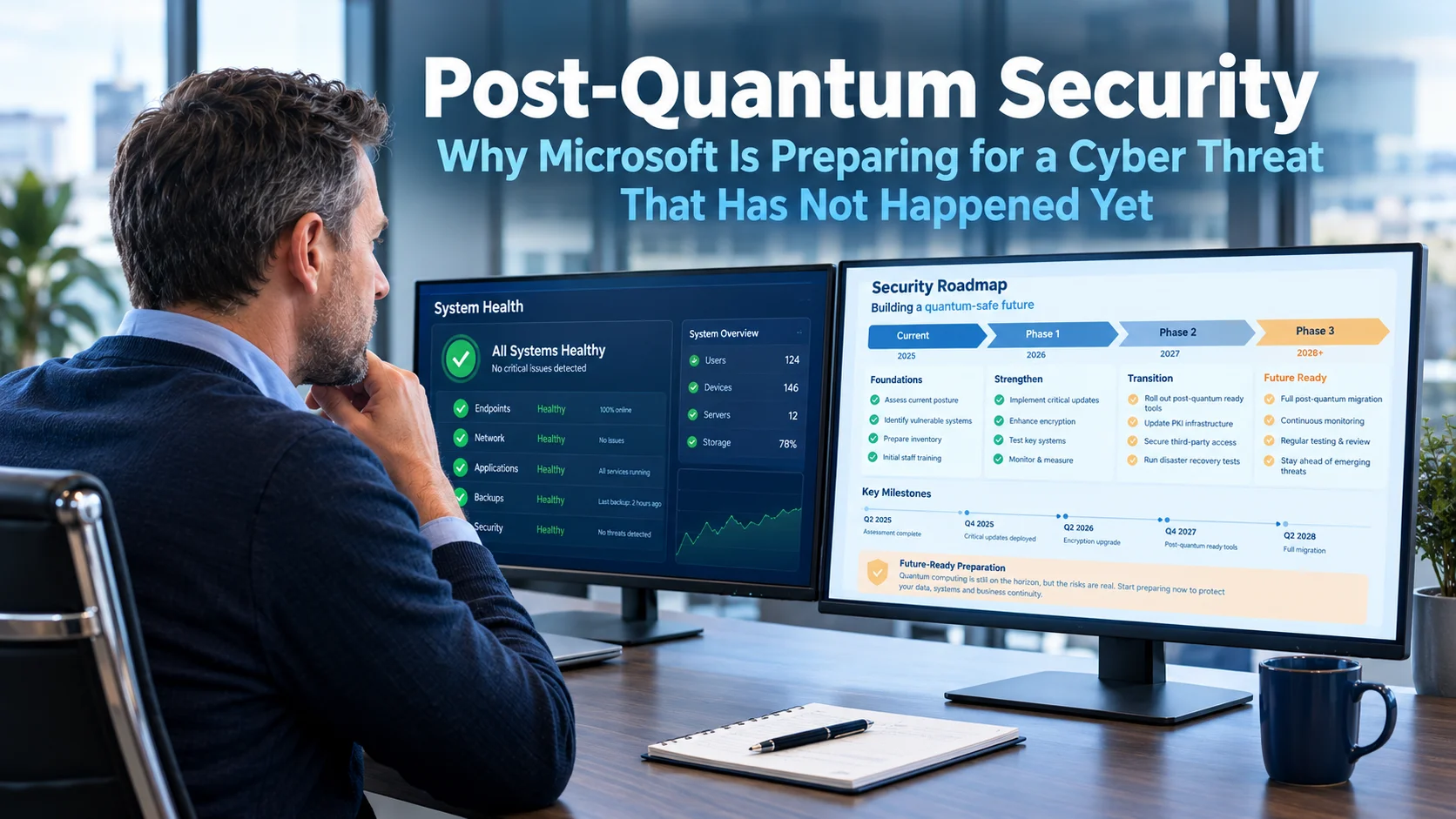
Post-Quantum Security: Why Microsoft Is Preparing for a Cyber Threat That Has Not Happened Yet
Post-quantum security is not a concern that most business owners need to act on today. However, it is a development worth understanding, both because of what it tells us about where cyber threats are heading and because of the practical lesson it contains for how businesses should approach their technology now. Microsoft has announced it…
SPF, DKIM and DMARC Explained: Email Security for Small Businesses
Criminals can send emails that look like they came from your business. SPF, DKIM and DMARC are three DNS records that stop them. Here's what each one does and how to get them right.
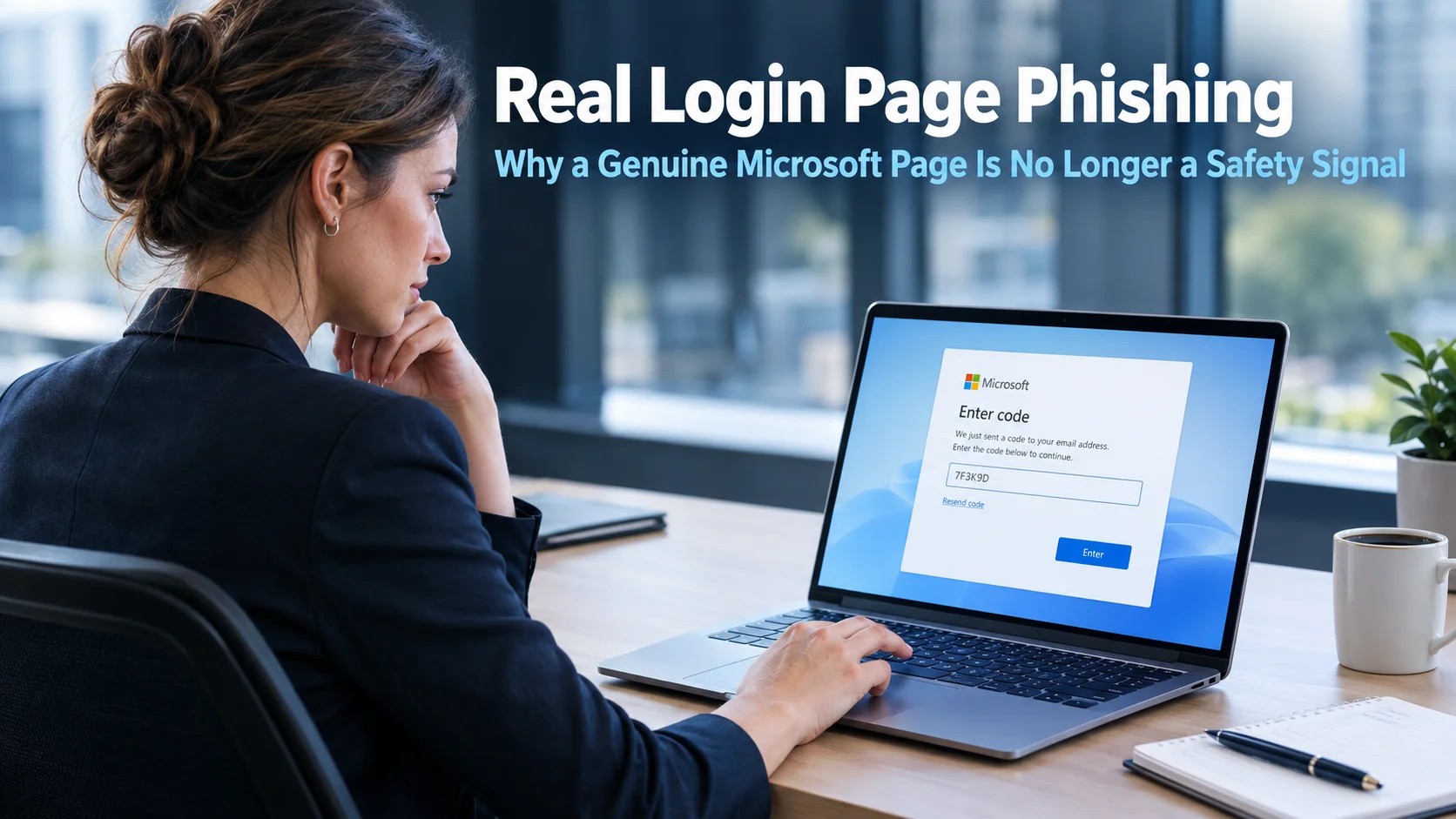
Real Login Page Phishing: Why a Genuine Microsoft Page Is No Longer a Safety Signal
Real login page phishing is one of the most difficult current threats for business teams to spot because it removes the signals that most people have been trained to look for. For years, the advice has been consistent: before you sign in anywhere, check you are on the genuine website. Look at the URL. Confirm…
When Should Businesses Use MFA to Protect Access?
When should businesses use MFA? Learn where it matters most, how to introduce it without disrupting staff, and how it helps reduce account takeover risk.
Microsoft Defender vs Third-Party Antivirus
Microsoft Defender vs third-party antivirus: learn what small businesses need for stronger endpoint security, simpler management and dependable support.
Cyber Insurance for Small Businesses: What It Covers
Cyber insurance can support recovery after an attack, but it is not a substitute for prevention. Learn what cover to check before you need to make a claim.
Network Security for Small Businesses in Sussex
Network security protects your business from disruption, fraud and data loss. See the controls small businesses need to stay productive and well protected.

Dark Web Monitoring for Small Businesses
Dark web monitoring helps Sussex businesses find exposed passwords and data early, so they can reduce fraud, account takeover and costly disruption risk.
How to Prepare a Phishing Response Plan for Work
Learn how to prepare phishing response procedures that protect your people, contain threats quickly and keep your small business operating with confidence.
Endpoint Detection Versus Antivirus Explained
Endpoint detection versus antivirus explained: see how both tools protect small businesses, where each falls short, and what protection you need today.
A Zero Trust Implementation Guide for SMEs
This zero trust implementation guide helps small businesses reduce cyber risk, protect data and introduce practical controls without disrupting daily work.
Cyber Essentials Certification Guide for SMEs
Our Cyber Essentials certification guide explains the controls, costs and steps UK businesses need to protect systems and win contracts with confidence.
Who Needs MFA? A Practical Guide for Businesses
Who needs MFA? Learn which businesses, people and systems need multi-factor authentication, how to apply it well, and avoid common rollout mistakes early.
7 Best Phishing Training Platforms for SMEs
Compare the best phishing training platforms for small businesses, from realistic simulations to reporting that helps reduce everyday cyber risk fast.
What a Business Firewall Review Should Find
A business firewall review reveals gaps that put your people, data and operations at risk, then sets practical priorities for reliable protection each day.
Endpoint Protection for Small Businesses: What It Is and How to Choose
An endpoint protection review for small businesses: what to test, which risks matter, and how to choose security that supports daily work for your team.
A Sussex Ransomware Example: What Fails First
A Sussex ransomware example shows how a routine email can halt a small business - and the practical controls that keep people, data and trading safe now.
Ransomware Trends Small Businesses Cannot Ignore
Ransomware trends are changing how small businesses protect data, staff and operations. Learn controls that reduce disruption and speed faster recovery.
Email Security Platform Comparison for Small Firms
Our email security platform comparison explains what small businesses should assess, from phishing protection and support to costs, continuity and fit.
How to Choose a Password Manager for Teams
Choose a password manager for teams with clear access controls, safer sharing and support that reduces risk without slowing staff down across your business.
Cyber Insurance Requirements 2026 UK Checklist
Cyber insurance requirements 2026 are tightening. See the practical controls UK businesses should evidence before renewing or buying cover for this year.
Top Cyber Essentials Controls for Small Businesses
Learn the top Cyber Essentials controls that protect your small business, reduce everyday cyber risk and prepare you for certification with confidence.
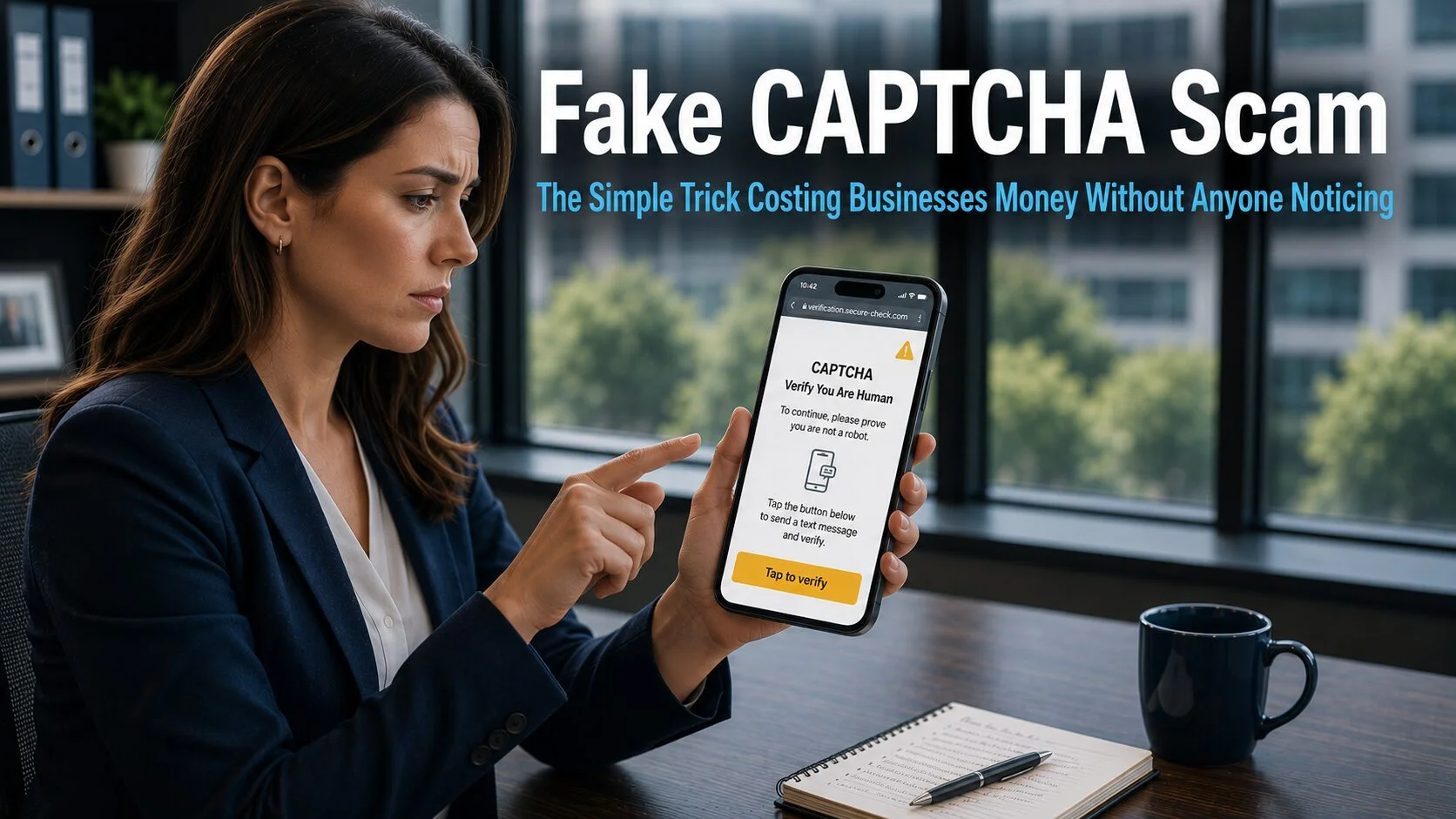
Fake CAPTCHA Scam: The Simple Trick Costing Businesses Money Without Anyone Noticing
A fake CAPTCHA scam is catching out business users by exploiting one of the most familiar and trusted elements of everyday online activity. CAPTCHAs, the verification prompts that ask you to tick a box, select images, or solve a puzzle to confirm you are not a bot, are something most people encounter regularly and complete…
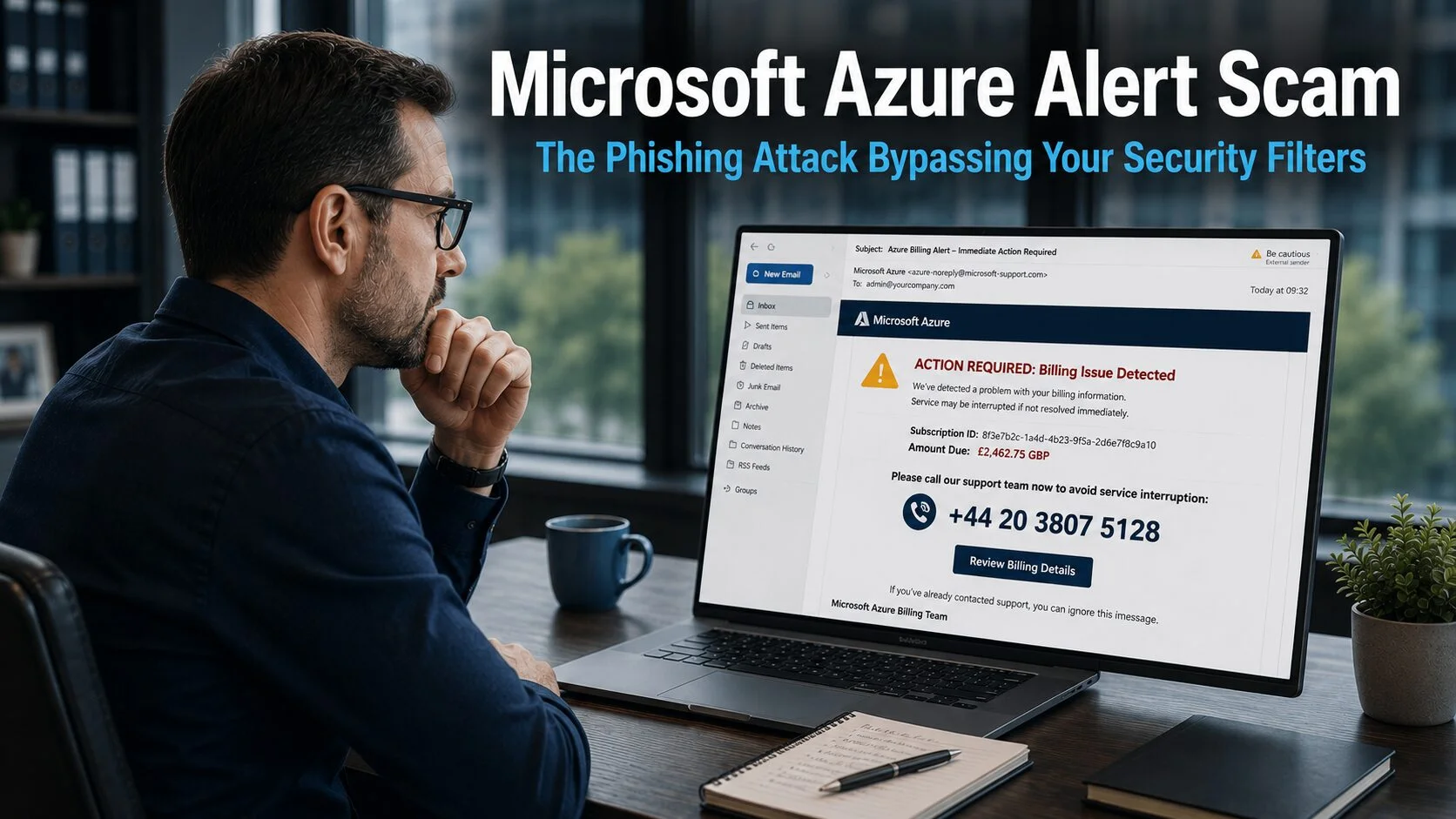
Microsoft Azure Alert Scam: Why This Phishing Attack Bypasses Security Filters
A Microsoft Azure alert scam is currently targeting businesses, and it is more convincing than most phishing attacks because it uses genuine Microsoft infrastructure to deliver its messages. The emails arrive from a real Microsoft domain, pass through standard email security tools without being flagged, and look exactly like the kind of system alerts that…
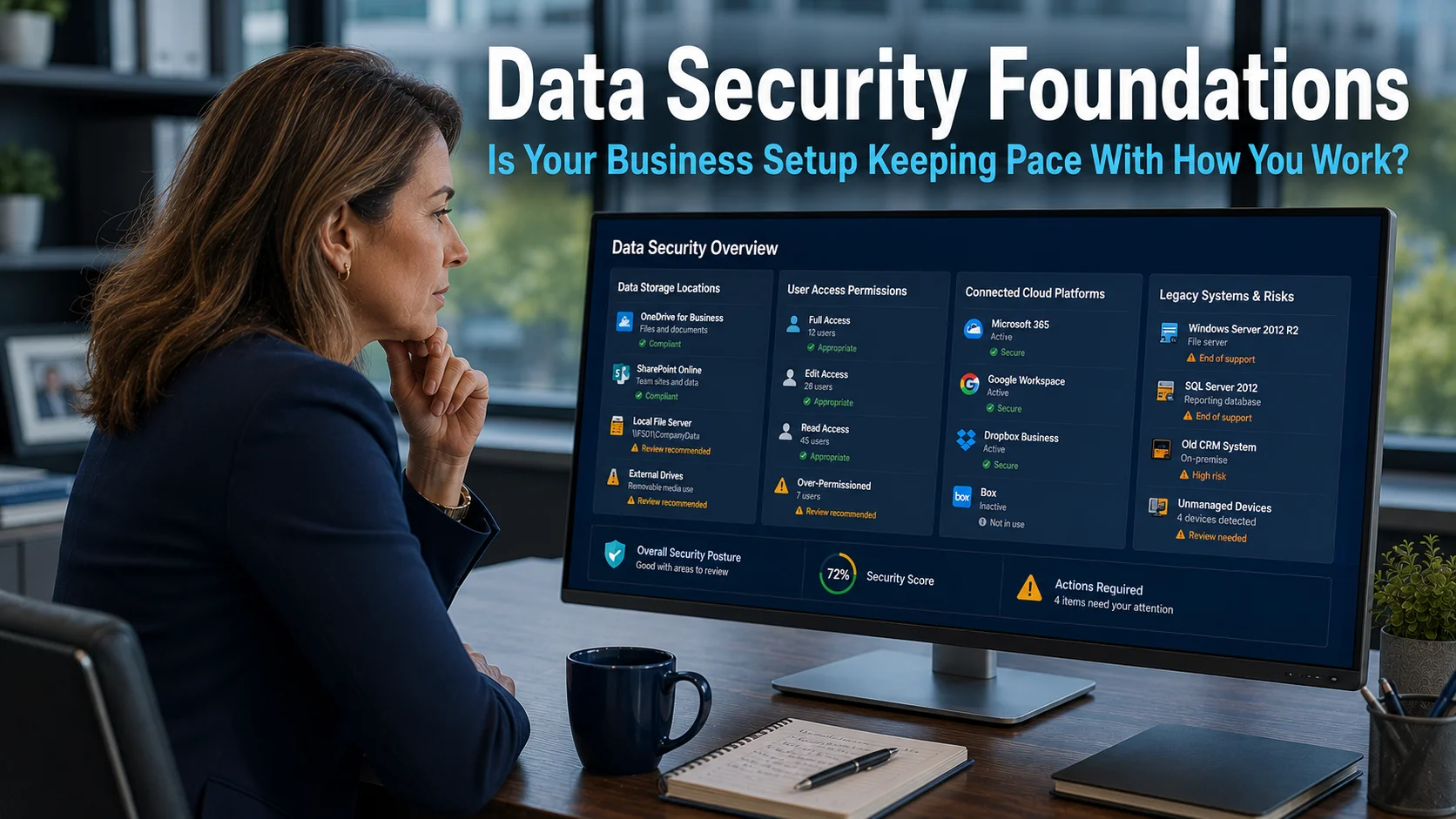
Data Security Foundations: Is Your Business Setup Keeping Pace With How You Work?
Data security foundations are something most business owners feel reasonably confident about until they look closely. Research shows that nearly seven in ten senior leaders name data security as their top priority when modernising or upgrading their systems. Yet only around a third feel confident they would pass their next regulatory audit. That is a…
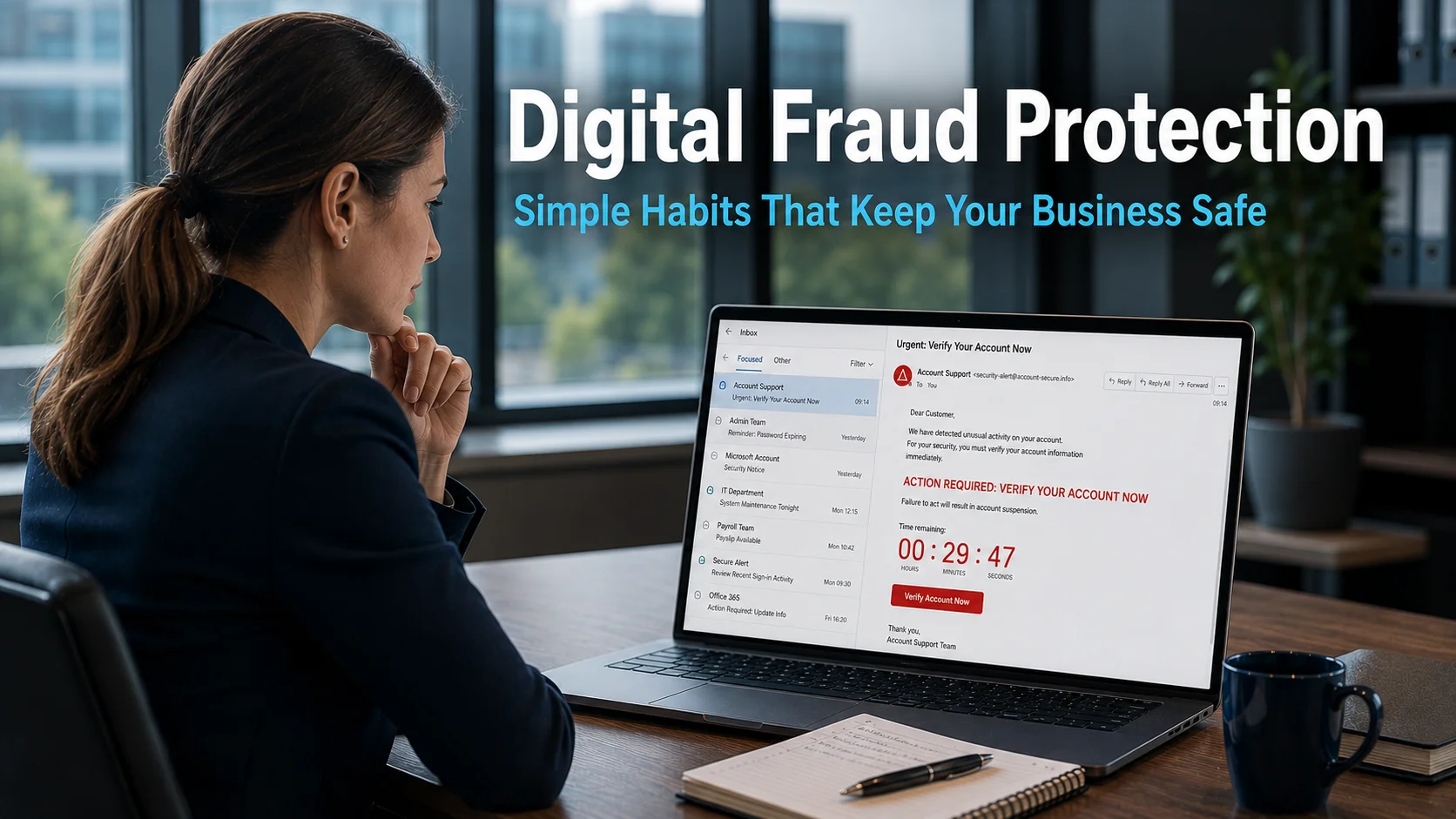
Digital Fraud Protection: Simple Habits That Keep Your Business Safe
Digital fraud protection has become a more pressing business concern than ever before. Scams are no longer the clumsy, obvious attempts that were easy to dismiss. AI tools have made fraudulent messages more convincing, pressure tactics more sophisticated, and the visual quality of fake websites and emails indistinguishable from genuine ones in many cases. However,…
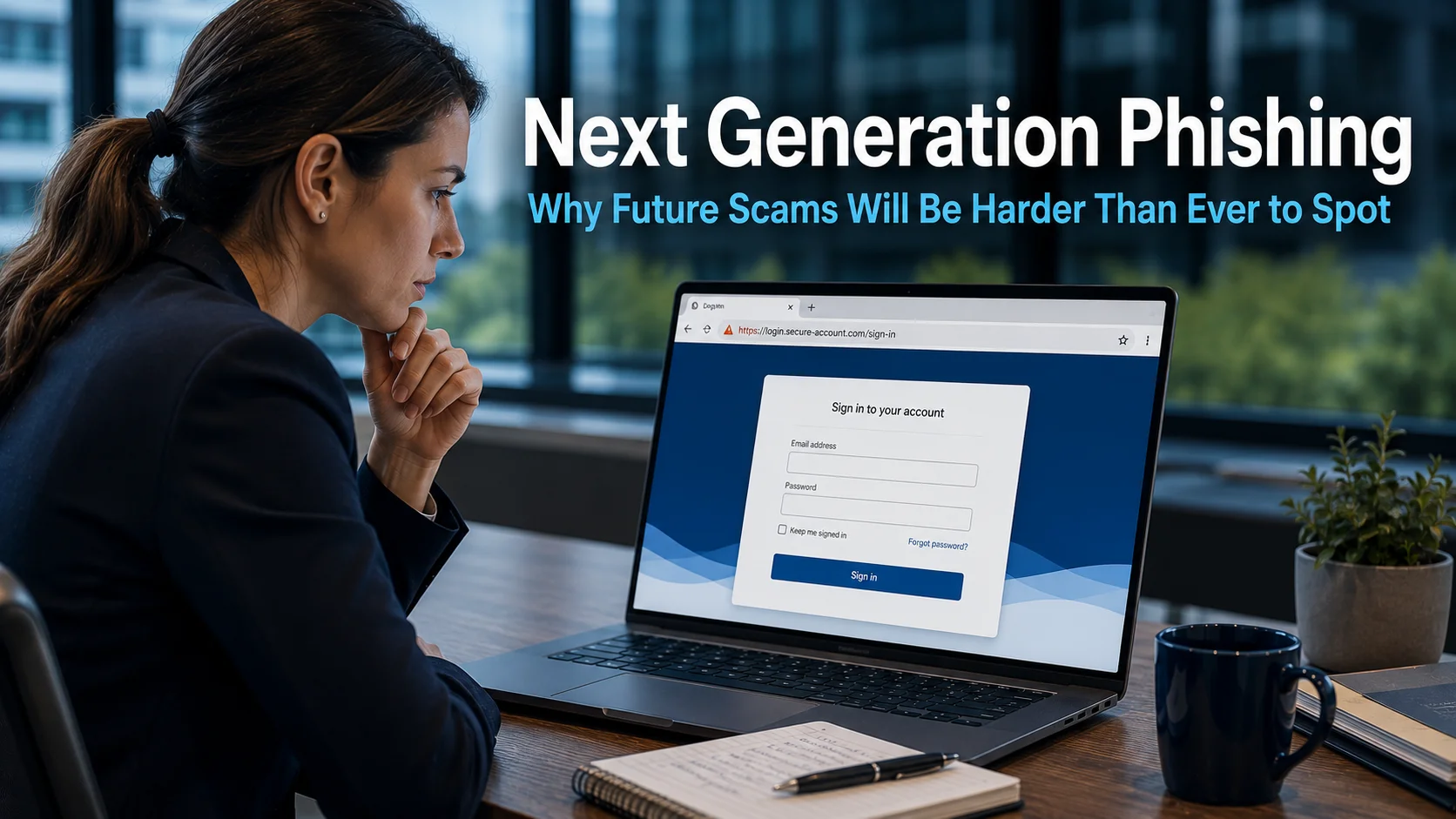
Next Generation Phishing: Why Future Scams Will Be Harder Than Ever to Spot
Next generation phishing is a shift in how attacks are built, not just how they are sent. For years, phishing scams followed a familiar pattern. The same fraudulent email went to thousands of recipients. The same fake website waited for whoever clicked the link. Security tools learned to recognise the patterns, spam filters became more…
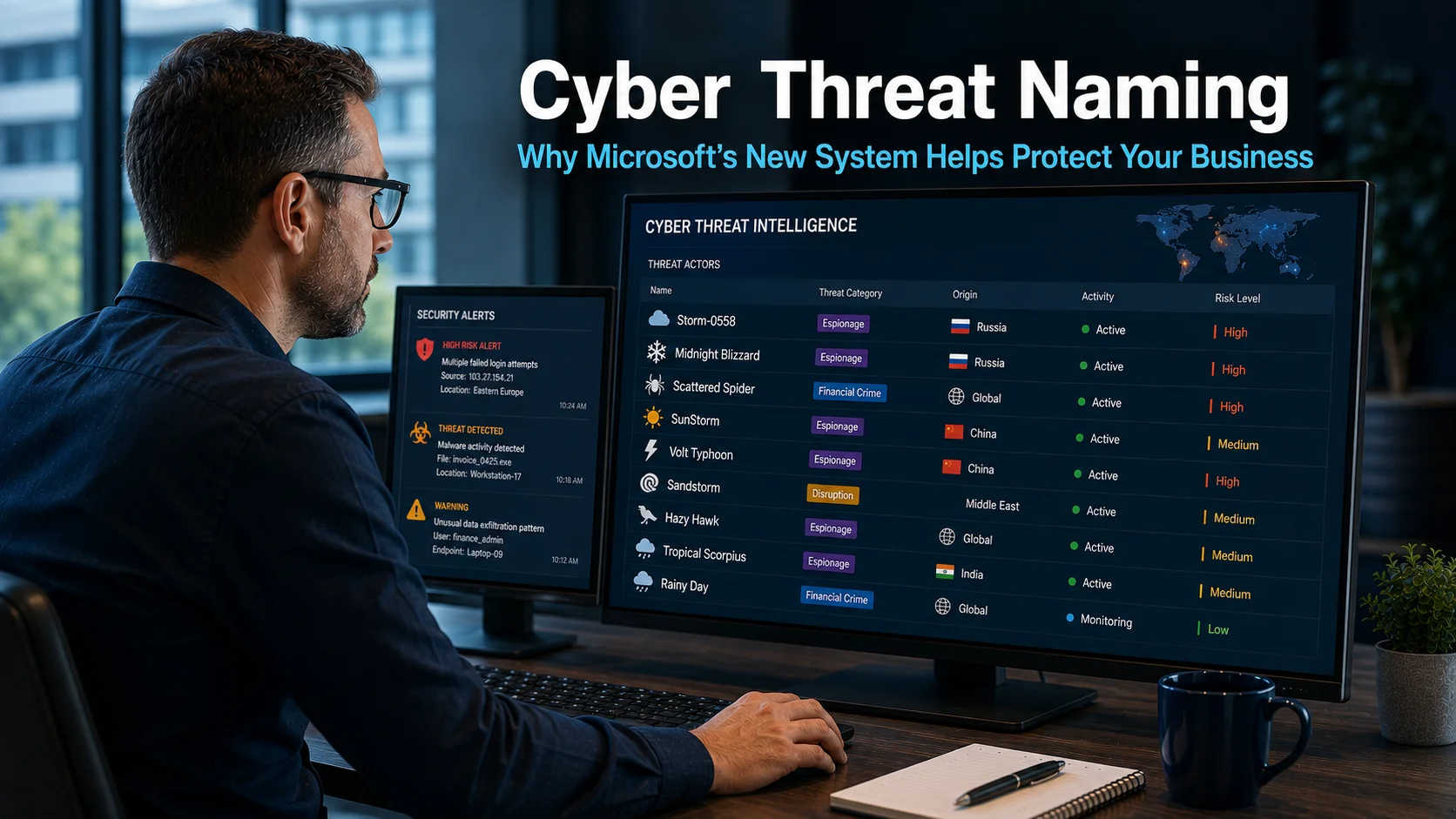
Cyber Threat Naming: Why Microsoft’s New System Helps Protect Your Business
Cyber threat naming is not the most obvious topic for a business owner’s reading list, but it has a direct and practical impact on how quickly threats to your business are identified and stopped. A persistent problem in the cyber security world is that the same hacking group can have completely different names depending on…
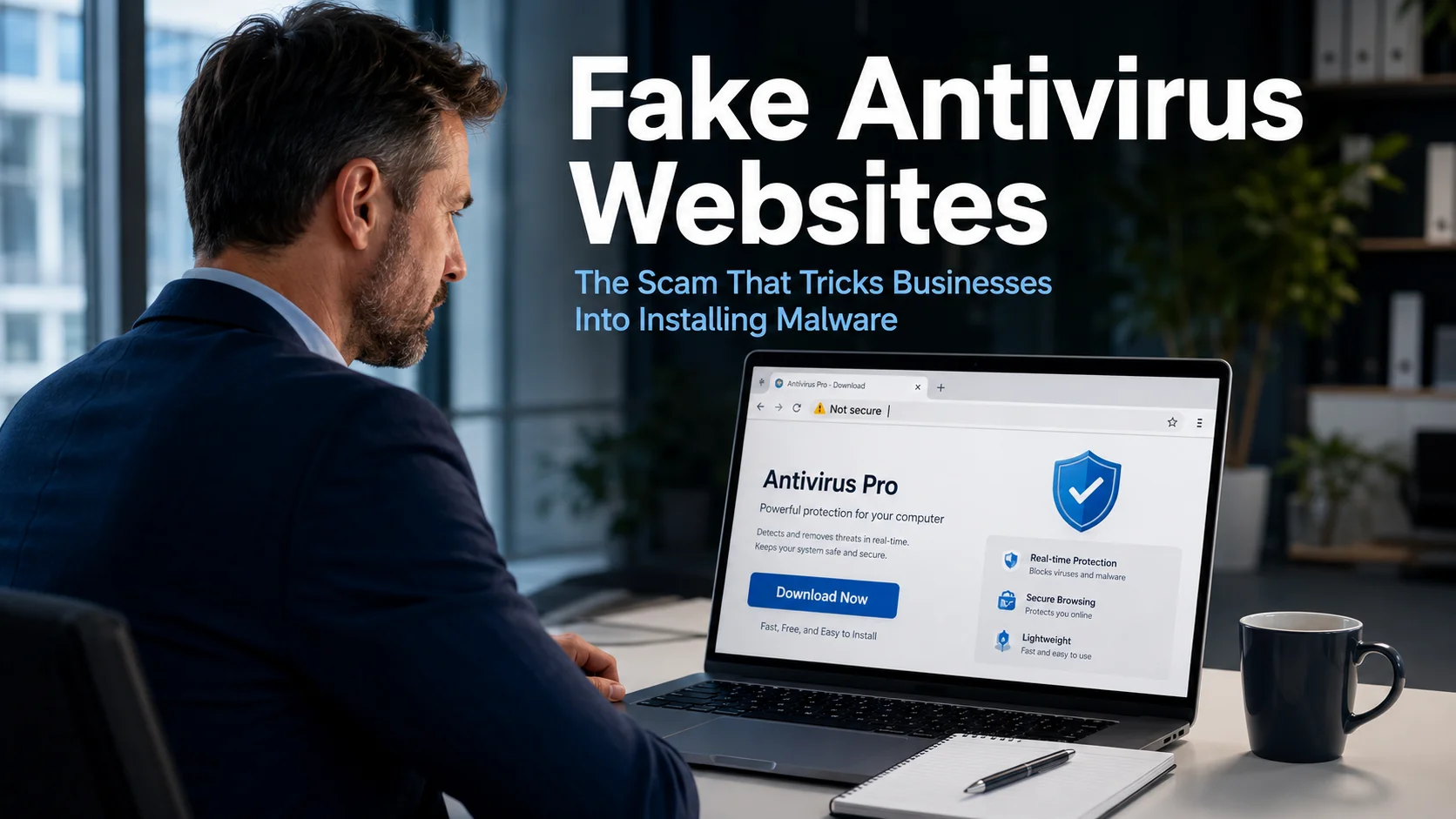
Fake Antivirus Websites: The Scam That Tricks Businesses Into Installing Malware
Fake antivirus websites are one of the more cynical forms of cyber attack currently targeting businesses. The people most likely to fall for this scam are precisely those trying to do the right thing: a business owner or IT-responsible team member looking to protect their systems by downloading security software. Attackers have identified this as…

How to Protect Cyber Security for Your Business
Learn how to protect cyber security in your small business with practical steps for people, devices, backups and day-to-day continuity plans that work.
7 Types of Cyber Security Protection for SMEs
Understand the types of cyber security protection small businesses need, from staff training to backups, and choose controls that keep work moving safely.
Cyber Security Policies for Small Business
Cyber security policies for small business that protect staff, data and operations without creating unnecessary paperwork or technical confusion at work.
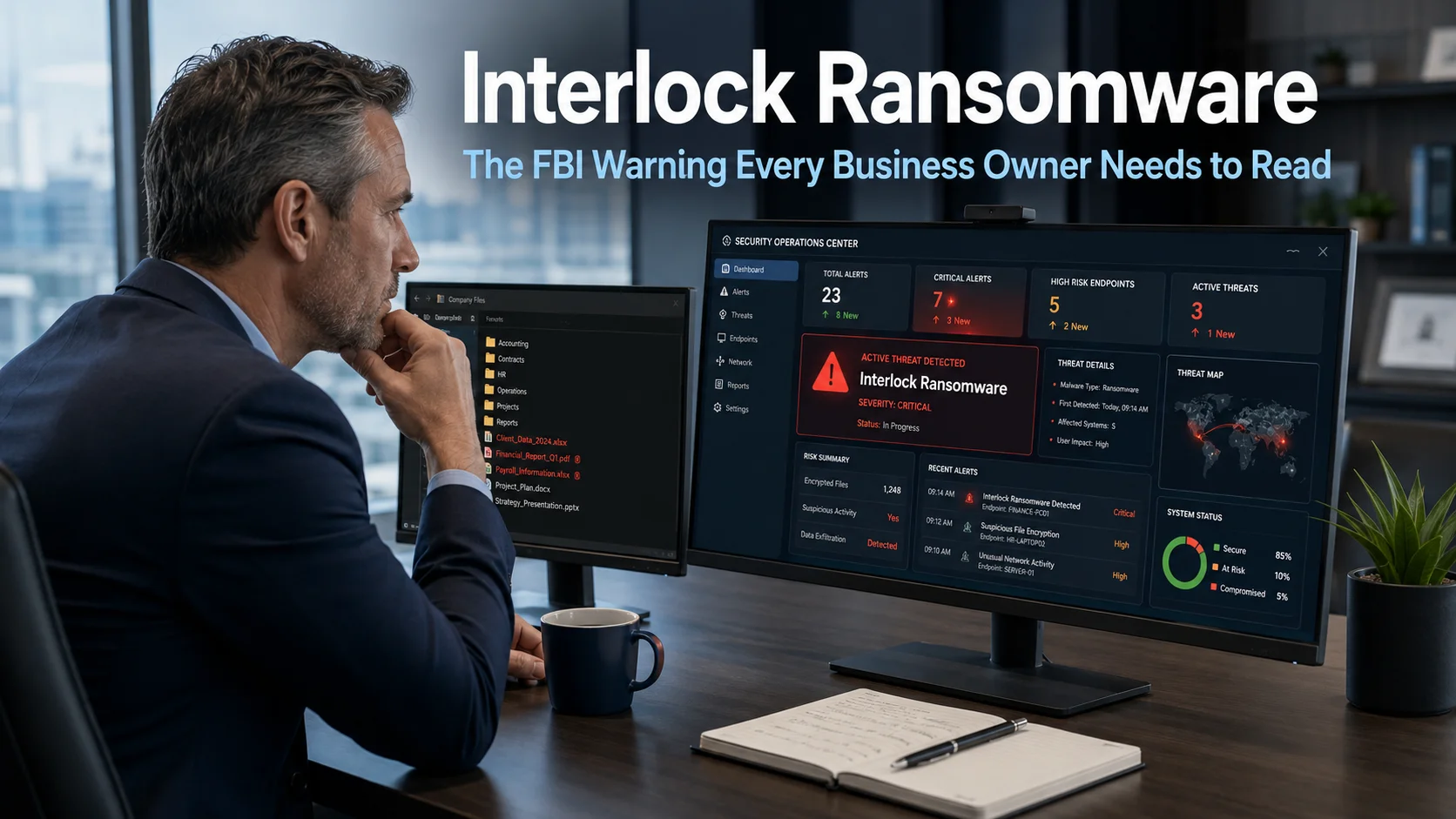
Interlock Ransomware: The FBI Warning Every Business Owner Needs to Read
Interlock ransomware has prompted a formal security warning from the FBI, and the threat is directly relevant to businesses across the UK. The group first appeared in September 2024 and has moved quickly to establish itself as one of the more aggressive ransomware operations currently active in Europe and North America. For business owners who…
Cyber Security Business Protection That Works
Cyber security business protection helps small firms reduce risk, avoid downtime and keep staff, systems and data safe with practical controls.
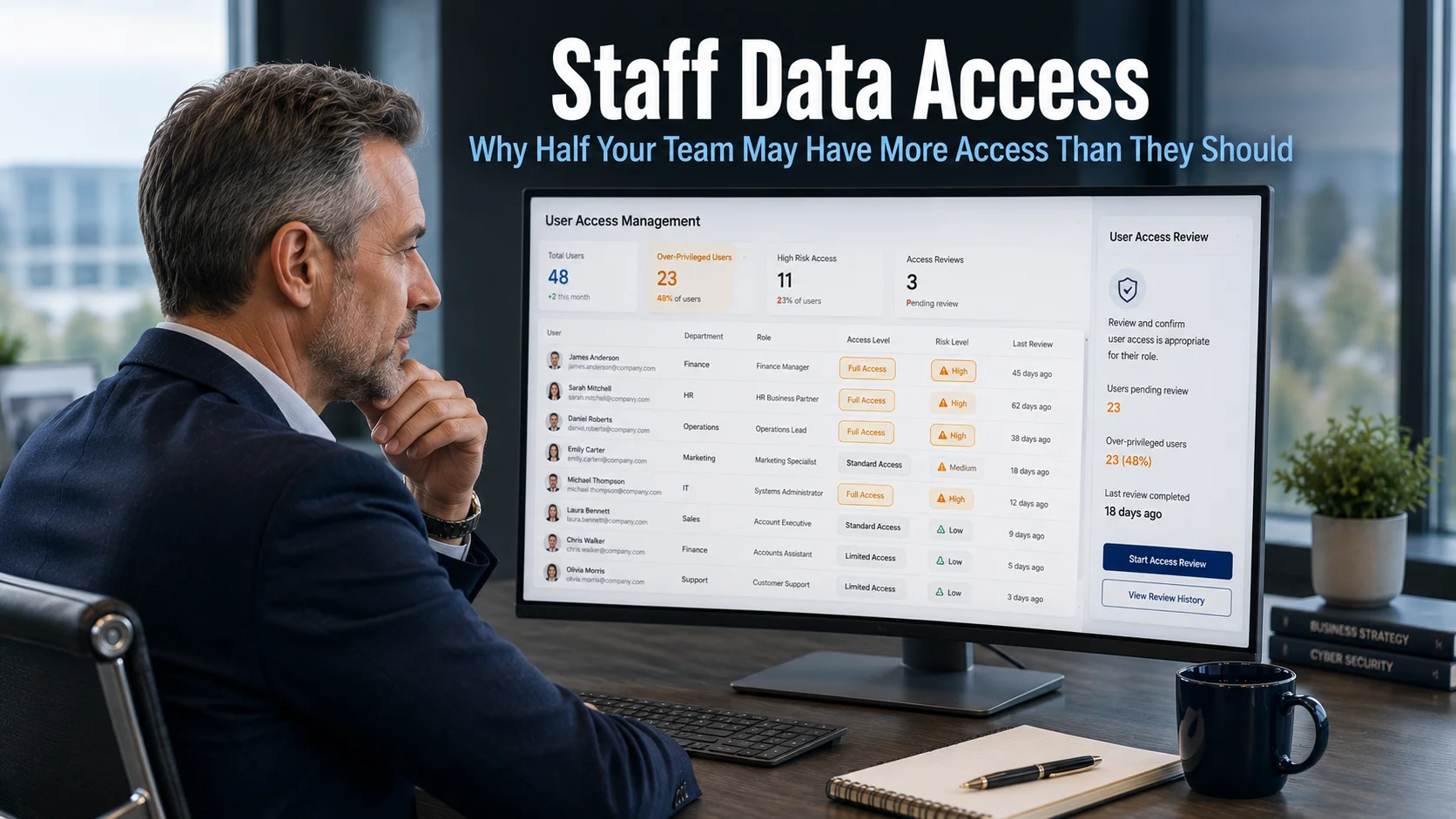
Staff Data Access: Why Half Your Team May Have More Access Than They Should
Staff data access is something most business owners set up once and rarely revisit. A new employee joins, they get access to the systems they need, and the assumption is that everything is in order. However, research tells a different story. Around half of all employees have access to significantly more business data than their…
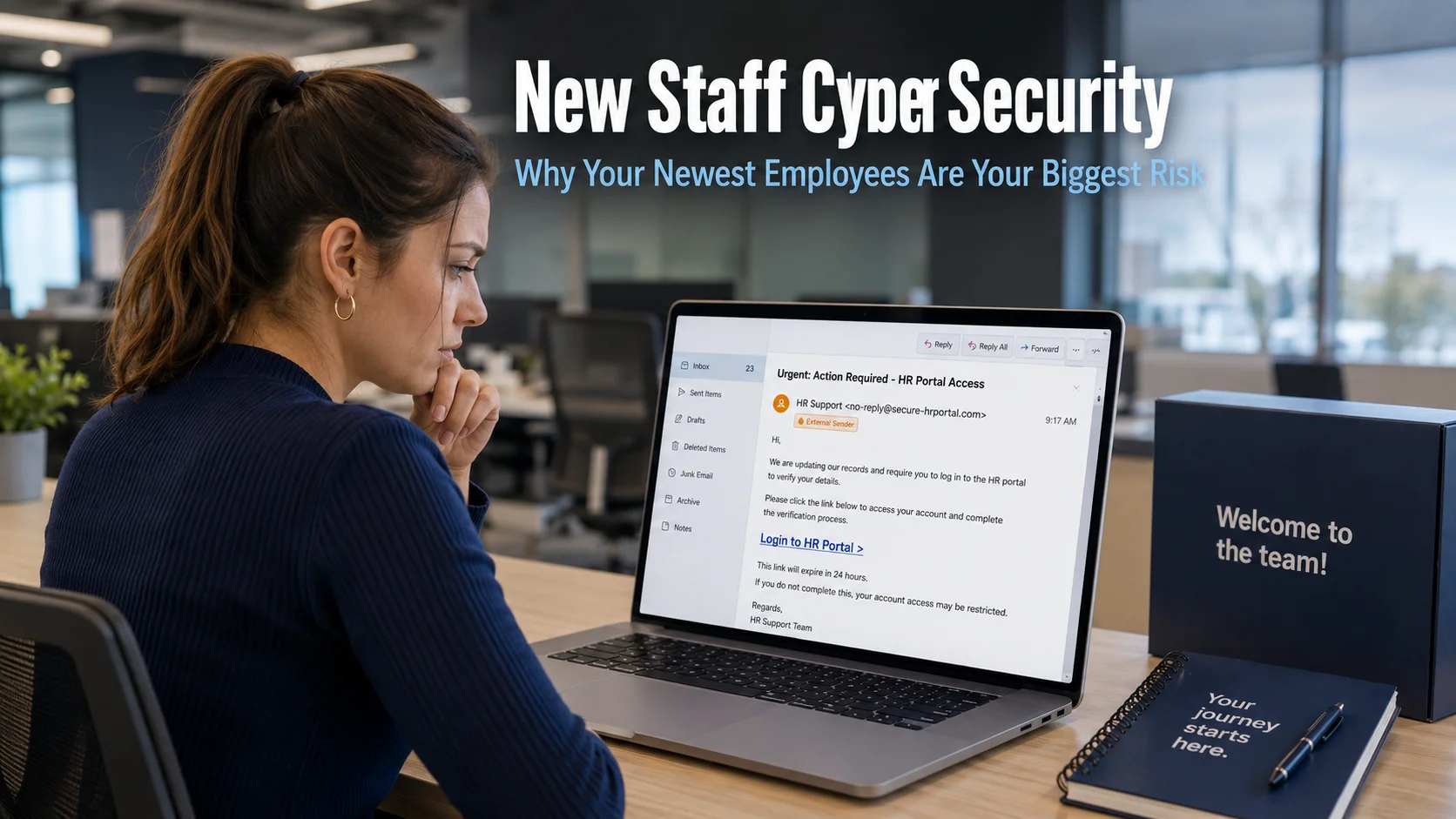
New Staff Cyber Security: Why Your Newest Employees Are Your Biggest Risk
New staff cyber security is one of the most overlooked gaps in business protection. When a new employee joins, there is a great deal to arrange. Equipment, system access, introductions, and the many practical details of getting someone up and running. Cyber security awareness, however, rarely makes it into those first few days with the…
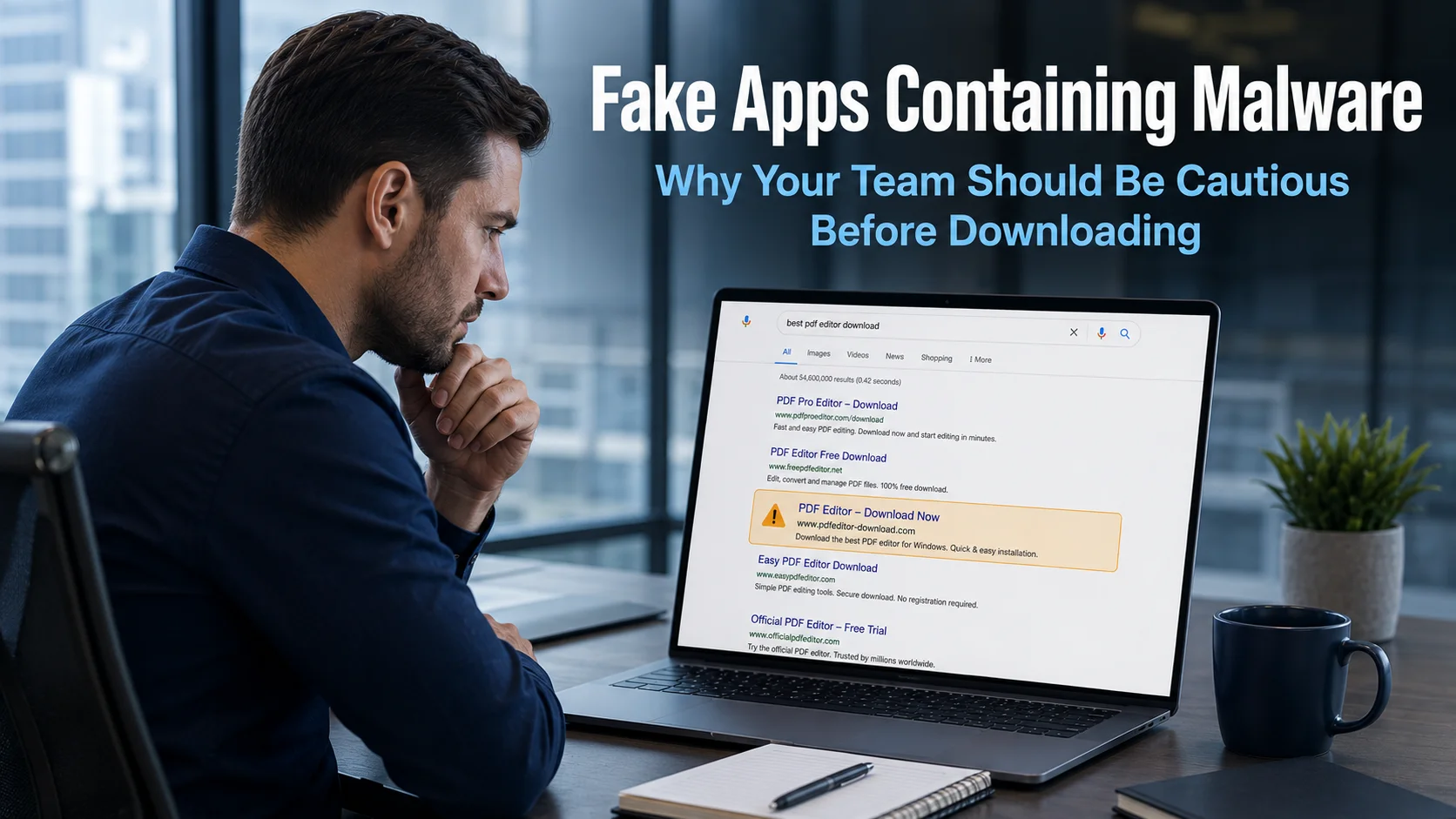
Fake Apps Containing Malware: Why Your Team Should Be Cautious Before Downloading
Fake apps containing malware are a growing threat that catches even careful, experienced employees off guard. When a member of your team downloads a new app for work, how confident can you really be that what they have installed is genuine? A new wave of cyber attacks is making that question considerably more important, and…
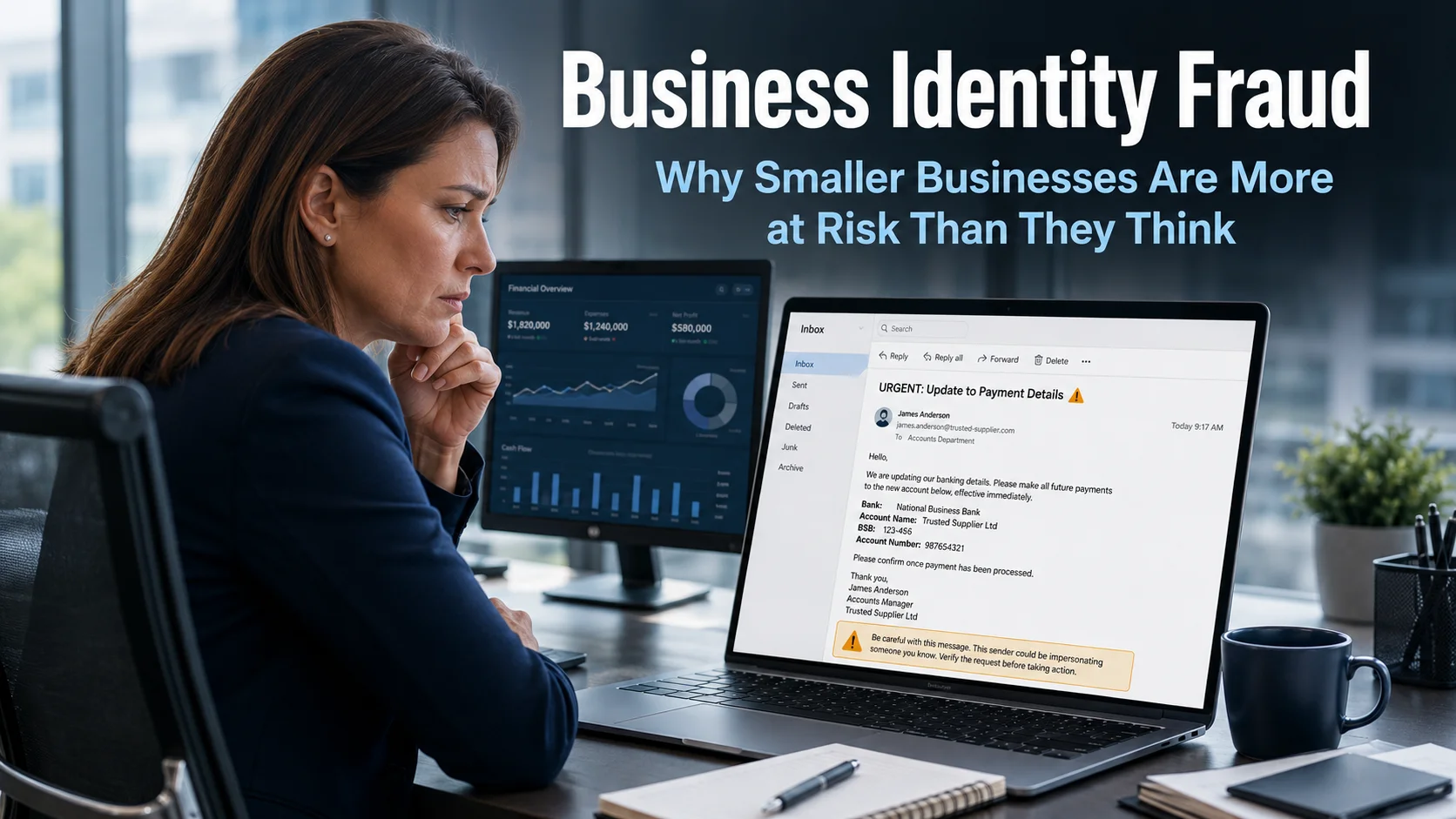
Business Identity Fraud: Why Smaller Businesses Are More at Risk Than They Think
Business identity fraud is growing at a pace that should concern every business owner, regardless of the size of their operation. There is a common assumption that fraud on a serious scale is something that happens to large corporations, not to businesses of ten, twenty, or fifty people. That assumption is not only wrong but…
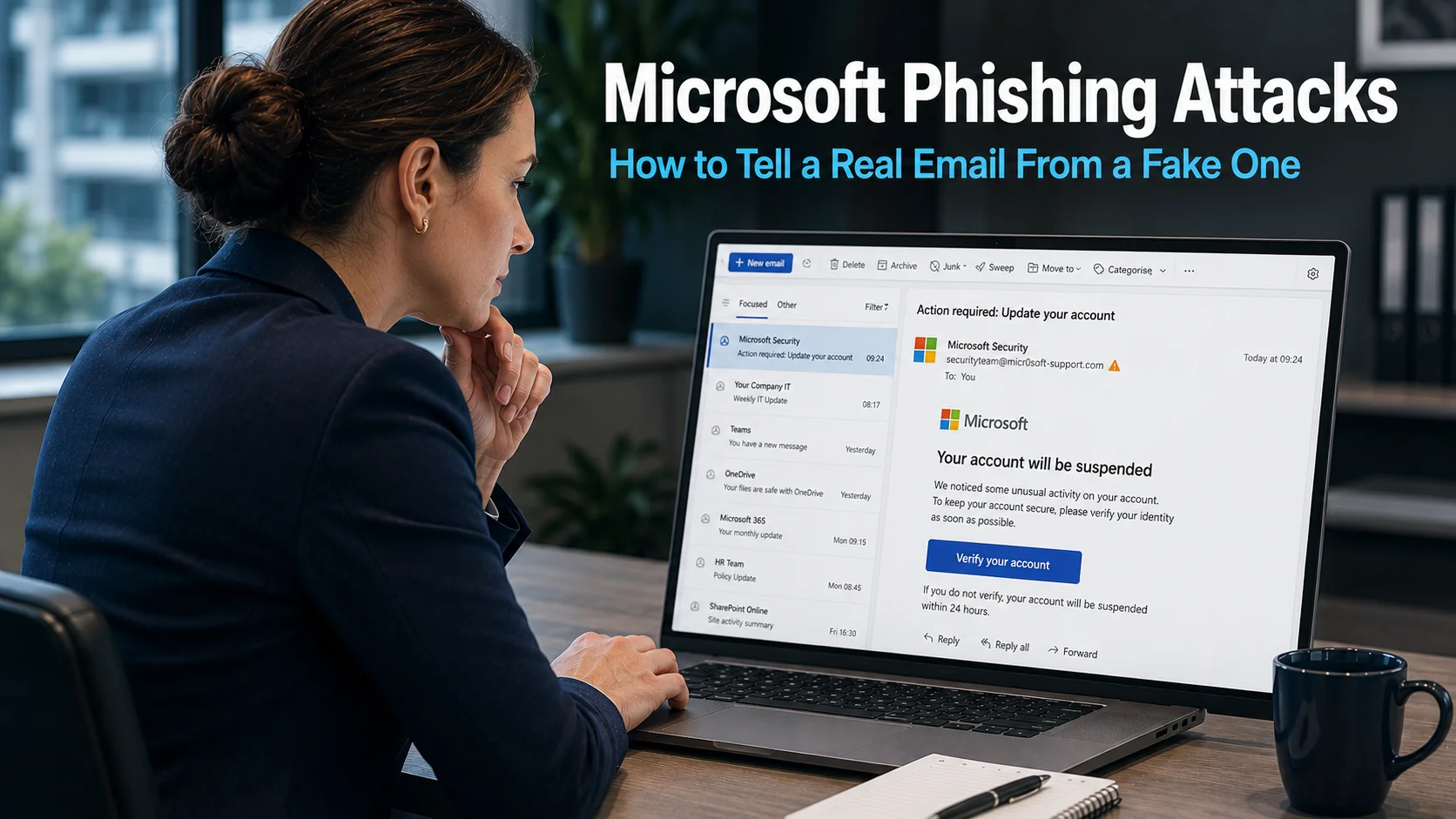
Microsoft Phishing Attacks: How to Tell a Real Email From a Fake One
Microsoft phishing attacks have become the single most common form of brand-impersonation fraud targeting businesses worldwide. New research from early 2025 found that more than a third of all brand-related phishing attempts were impersonating Microsoft. Google and Apple appeared further down the same list, with the three tech giants together accounting for more than half…
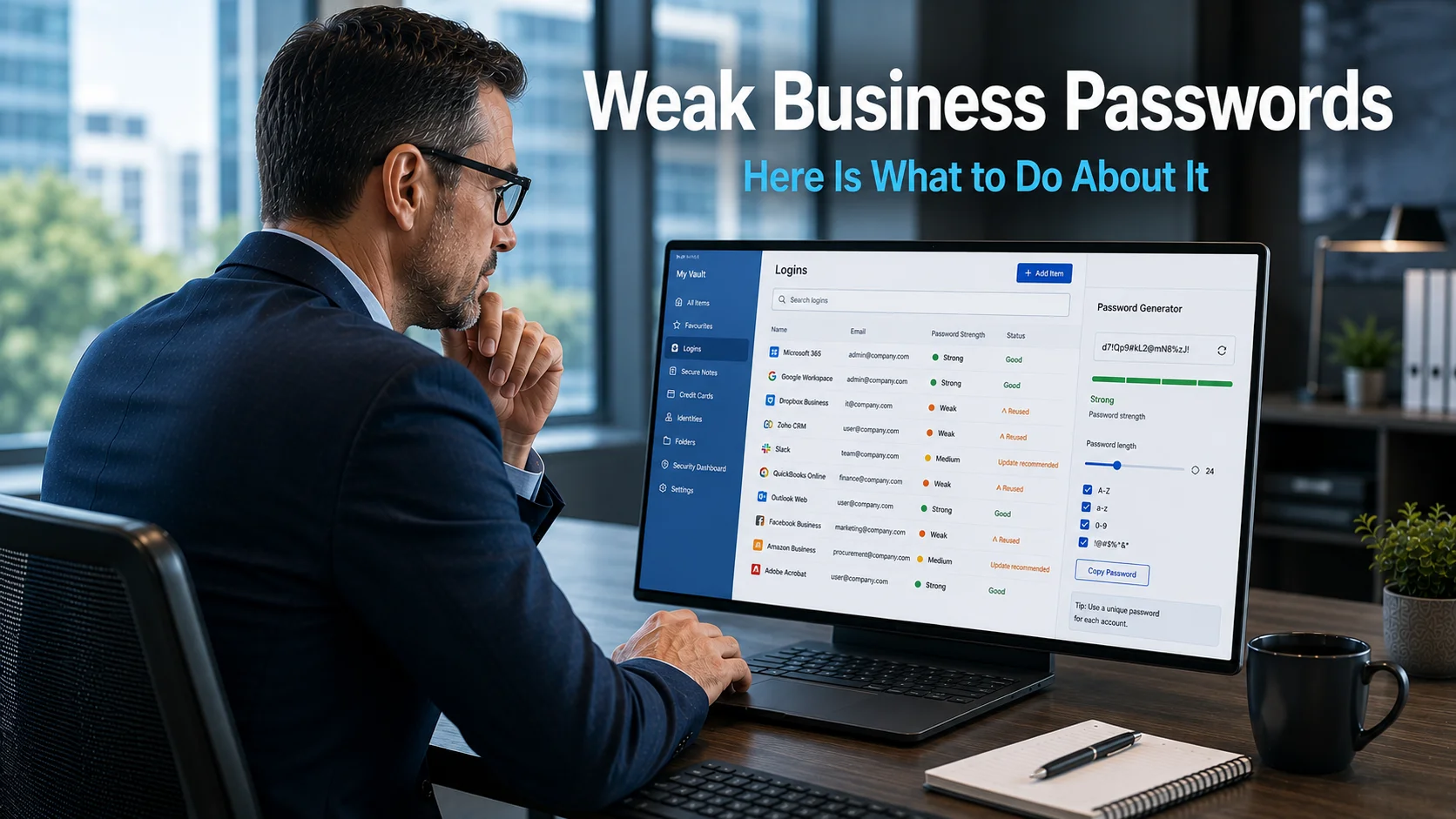
Weak Business Passwords Are Still Everywhere: Here Is What to Do About It
Weak business passwords remain one of the most persistent and easily exploited vulnerabilities in business security. Despite years of awareness, research continues to show that simple, predictable credentials are still in widespread use across businesses of every size. The most common business password identified in recent research is still a straightforward number sequence. Right behind…
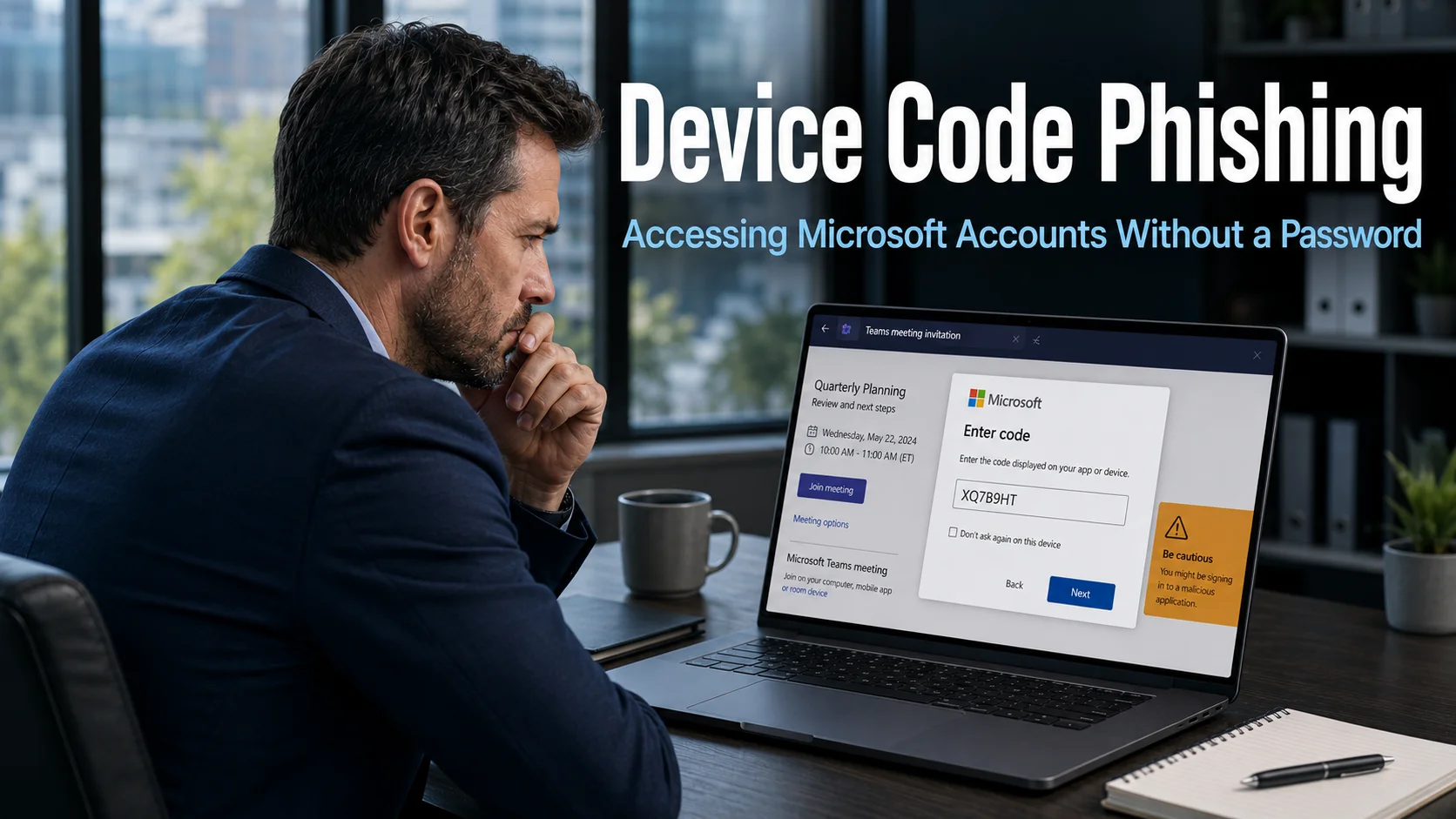
Device Code Phishing: How Criminals Access Microsoft Accounts Without a Password
Device code phishing is a sophisticated attack that Microsoft has recently flagged as a growing threat to businesses. What makes it particularly concerning is the central feature that sets it apart from most phishing scams: attackers do not need your password. They do not need to trick your team into typing credentials into a fake…
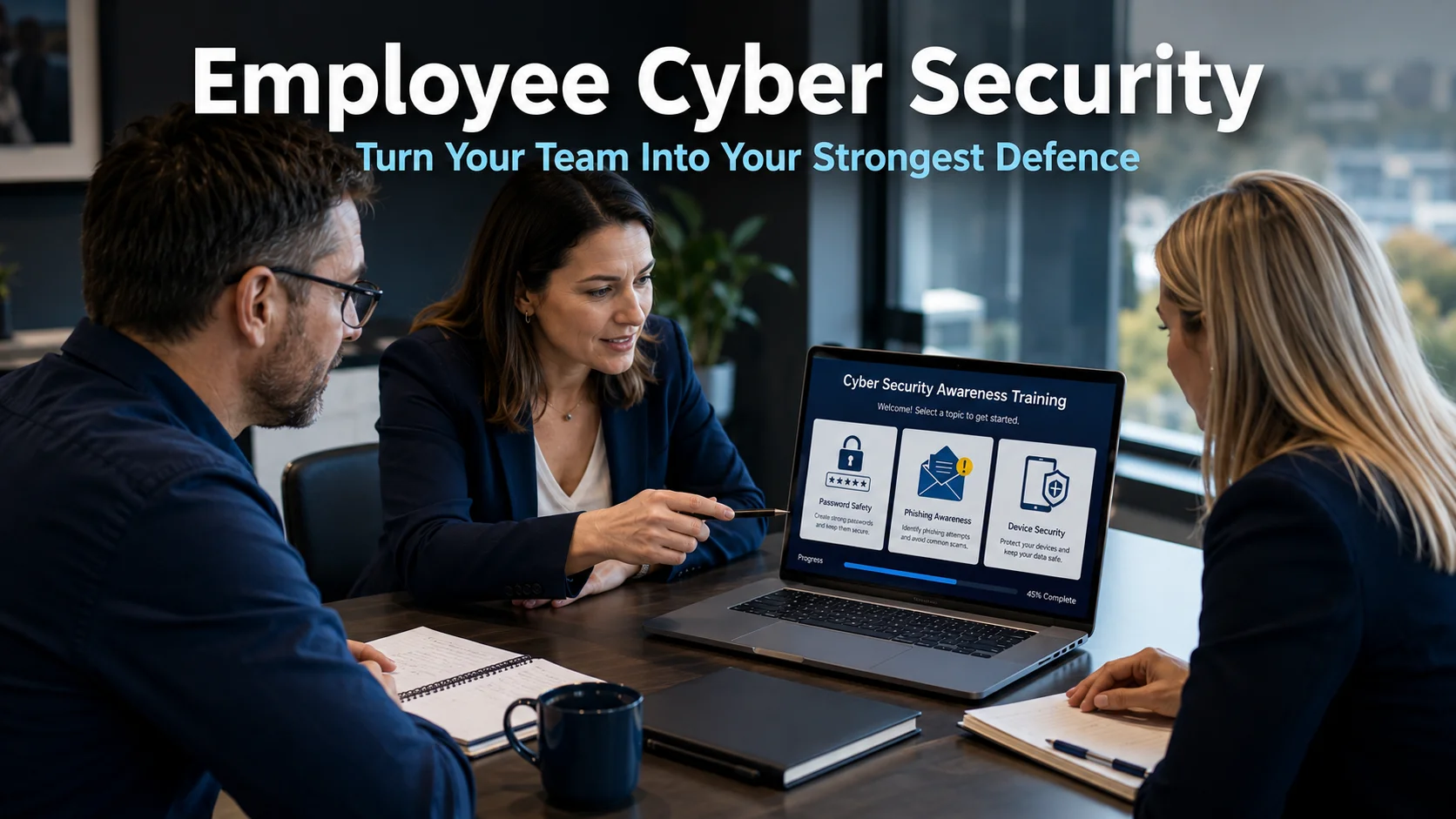
Employee Cyber Security: Turn Your Team Into Your Strongest Defence
Employee cyber security is one of the most overlooked areas of business protection. Most business owners have invested in the right tools: strong passwords, firewalls, up-to-date software. However, technical defences only go so far. Research consistently shows that human behaviour remains the most common route cyber criminals use to gain access to business systems. The…
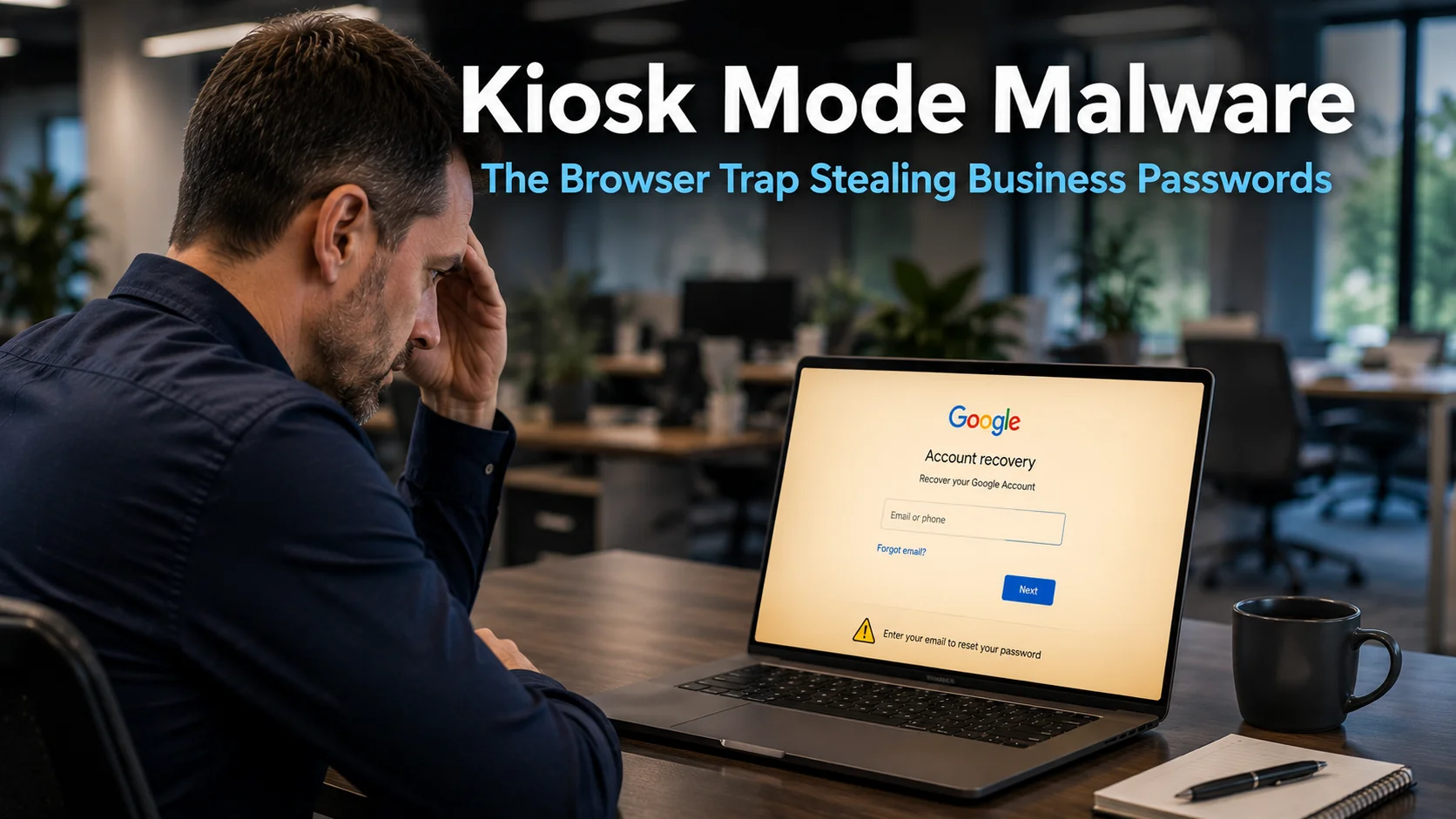
Kiosk Mode Malware: The Scam That Traps Your Browser to Steal Passwords
Kiosk mode malware is a growing threat that catches business users off guard precisely because it feels like a technical problem rather than an attack. Your browser suddenly fills the screen. The navigation bar disappears. You cannot close the window or navigate away. Then a familiar-looking Google login page appears, asking you to reset your…
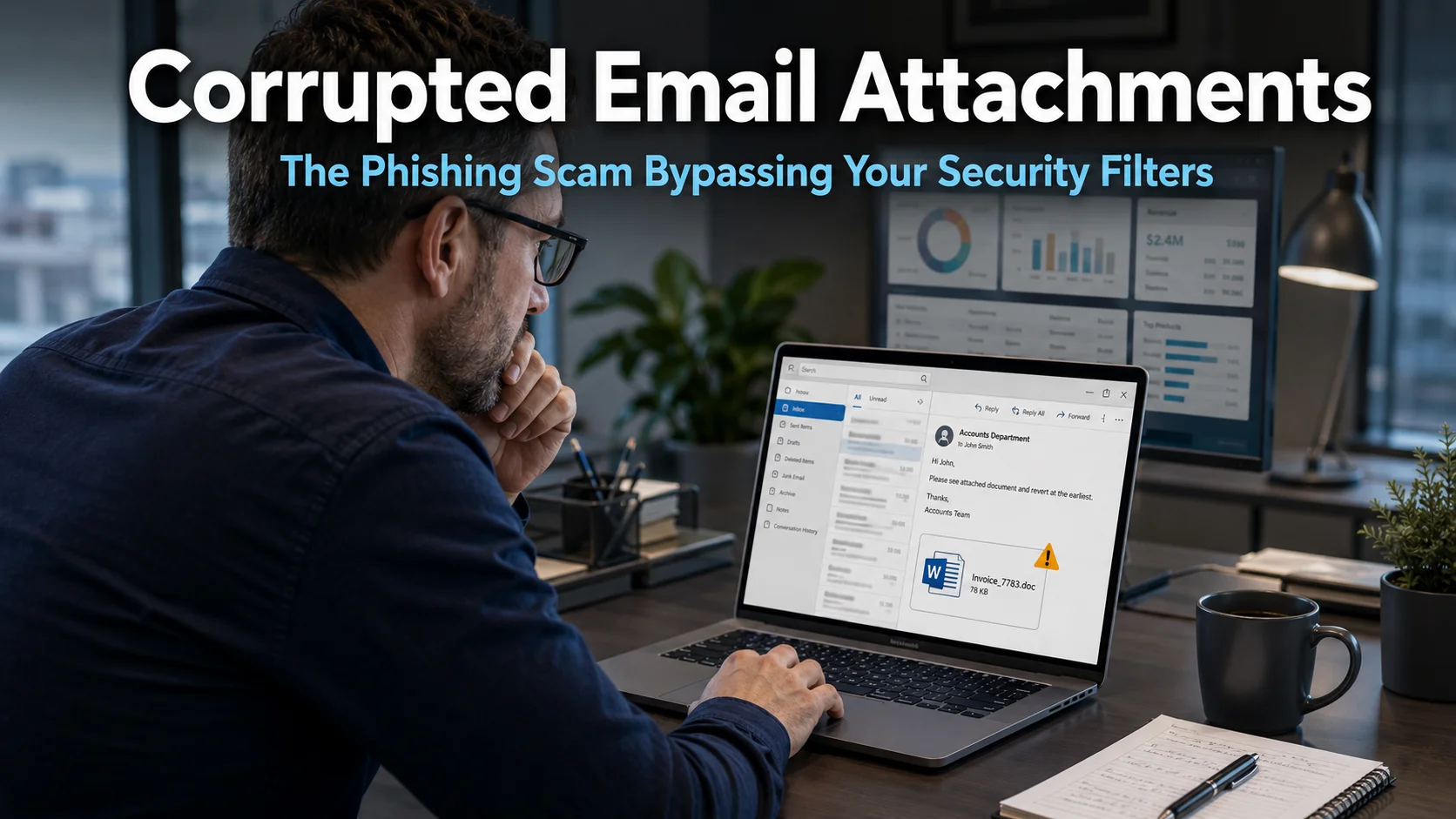
Corrupted Email Attachments: The Phishing Scam Bypassing Your Security Filters
Corrupted email attachments have become the latest weapon in the phishing armoury, and they are catching businesses off guard. An employee spots an email with a Word document attached. It looks like an invoice, a delivery notice, or a message from a supplier. They open it. Seconds later, they have handed cyber criminals a route…
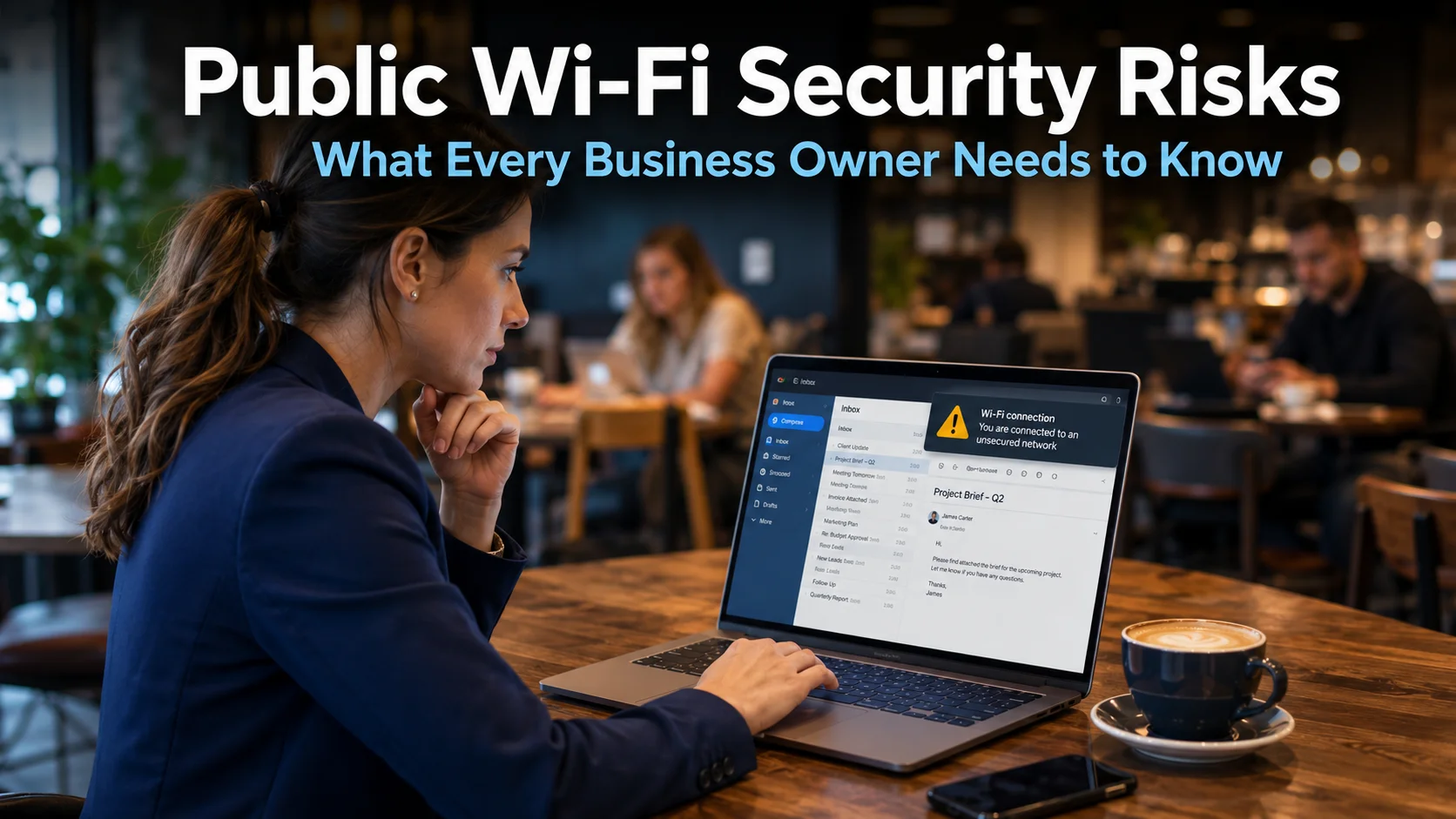
Public Wi-Fi Security Risks Every Business Owner Needs to Know
Public Wi-Fi security risks are something most business owners have heard mentioned, but few have thought through carefully. Cafés, hotels, airports, and trains all offer free wireless connections. For anyone catching up on emails between meetings or working remotely for the day, it feels like a harmless convenience. However, connecting to an unsecured public network…
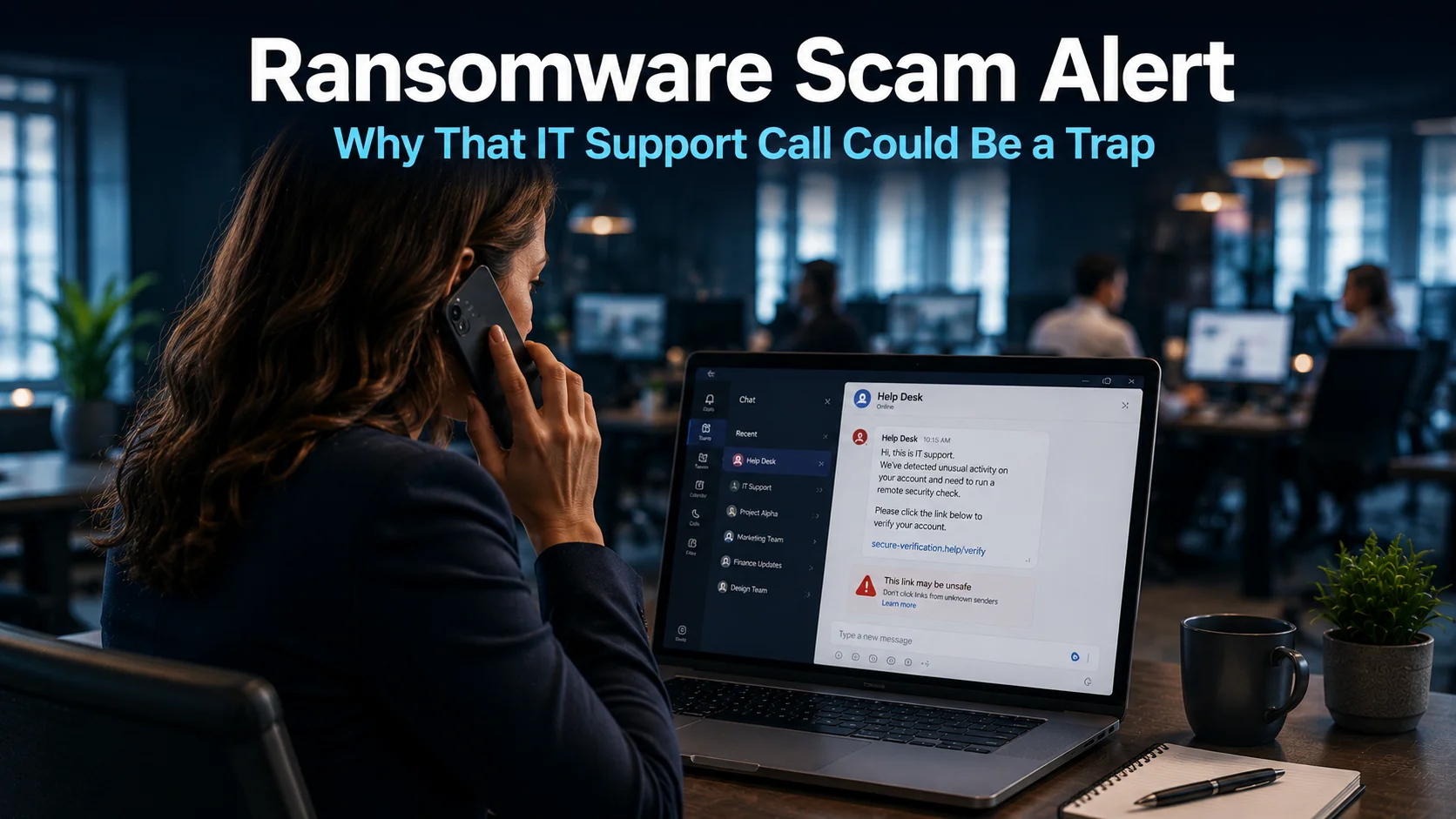
Ransomware Scam: Why That Support Call Could Be a Trap
A sophisticated ransomware scam is targeting businesses across the UK, and it is catching people off guard because it looks and sounds entirely legitimate. Rather than relying on a suspicious link or an obvious phishing email, attackers are posing as IT support staff and contacting employees directly, by phone and through Microsoft Teams. If your…
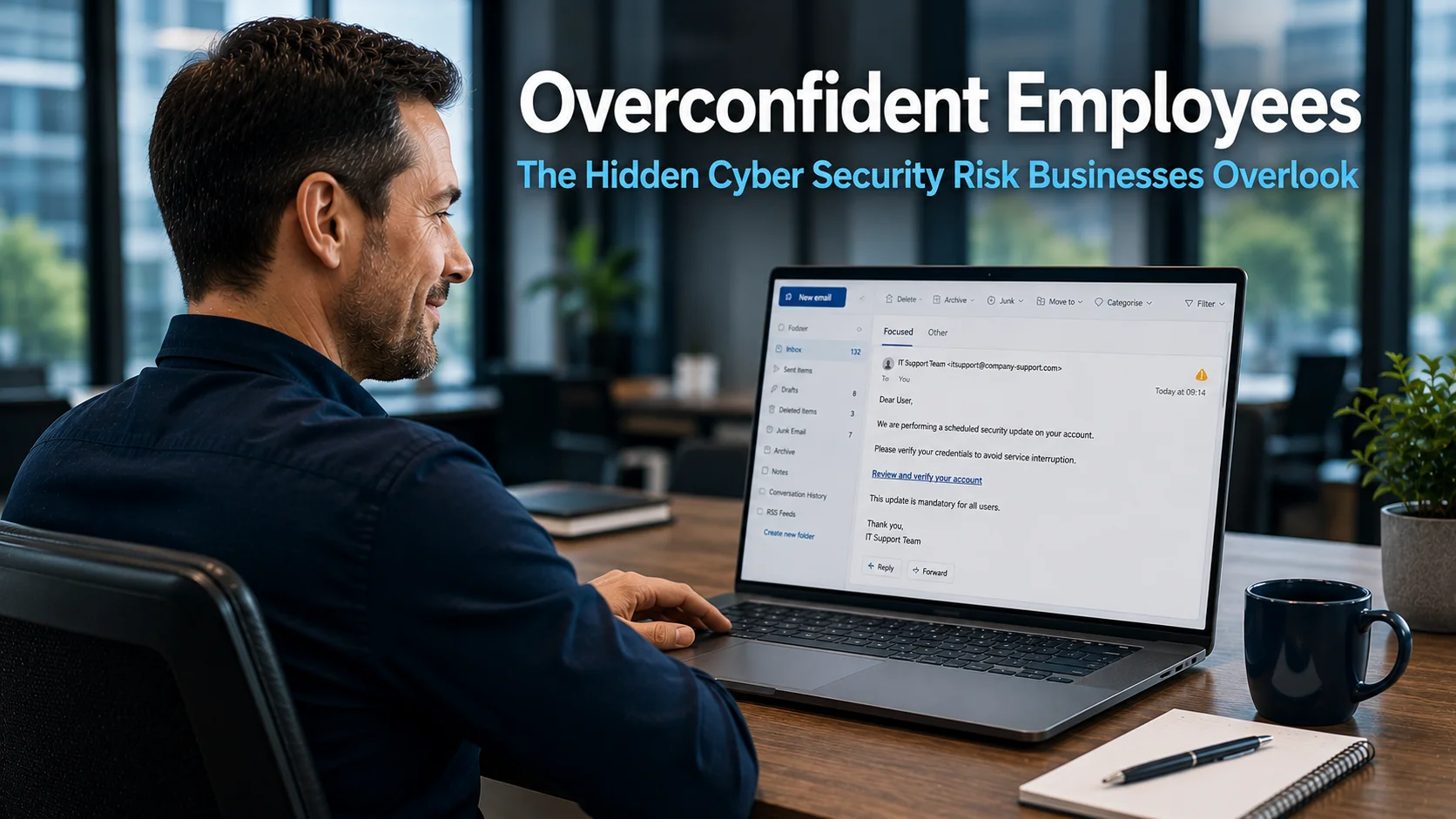
Overconfident Employees: The Hidden Cyber Security Risk Businesses Overlook
Overconfident employees represent one of the most underestimated cyber security risks in any business. Most business owners assume that staff awareness is the solution to phishing and online scams. Train your team, and they will recognise the attacks before they cause harm. That logic is sound in principle. However, research reveals a significant flaw in…

Malvertising Attacks: How Online Ads Are Being Used to Target Your Business
Malvertising attacks are a growing cyber threat that most business owners have never heard of, yet their team encounters the risk every single day. The name combines the words malicious and advertising. In short, cyber criminals use online ads as a vehicle to deliver malware, steal login credentials, or trick employees into handing over money.…
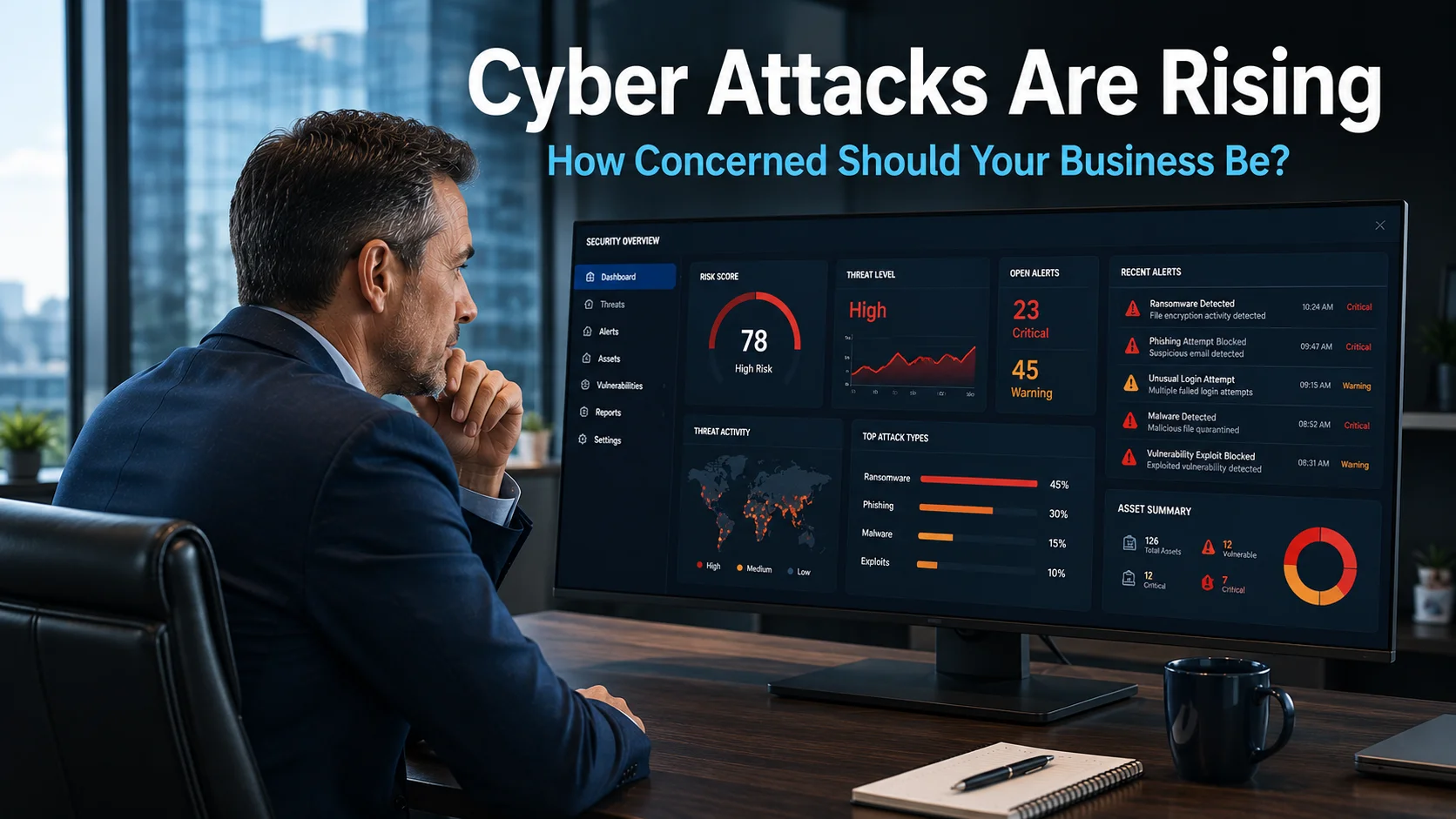
Cyber Attacks Are Rising: How Concerned Should Your Business Be?
Cyber attacks are no longer a distant threat that only affects large corporations. They have become the single biggest concern for businesses worldwide, overtaking supply chain disruption, economic uncertainty, and even natural disasters in terms of the risk they pose to day-to-day operations. If you have been wondering how seriously to take this threat, the…
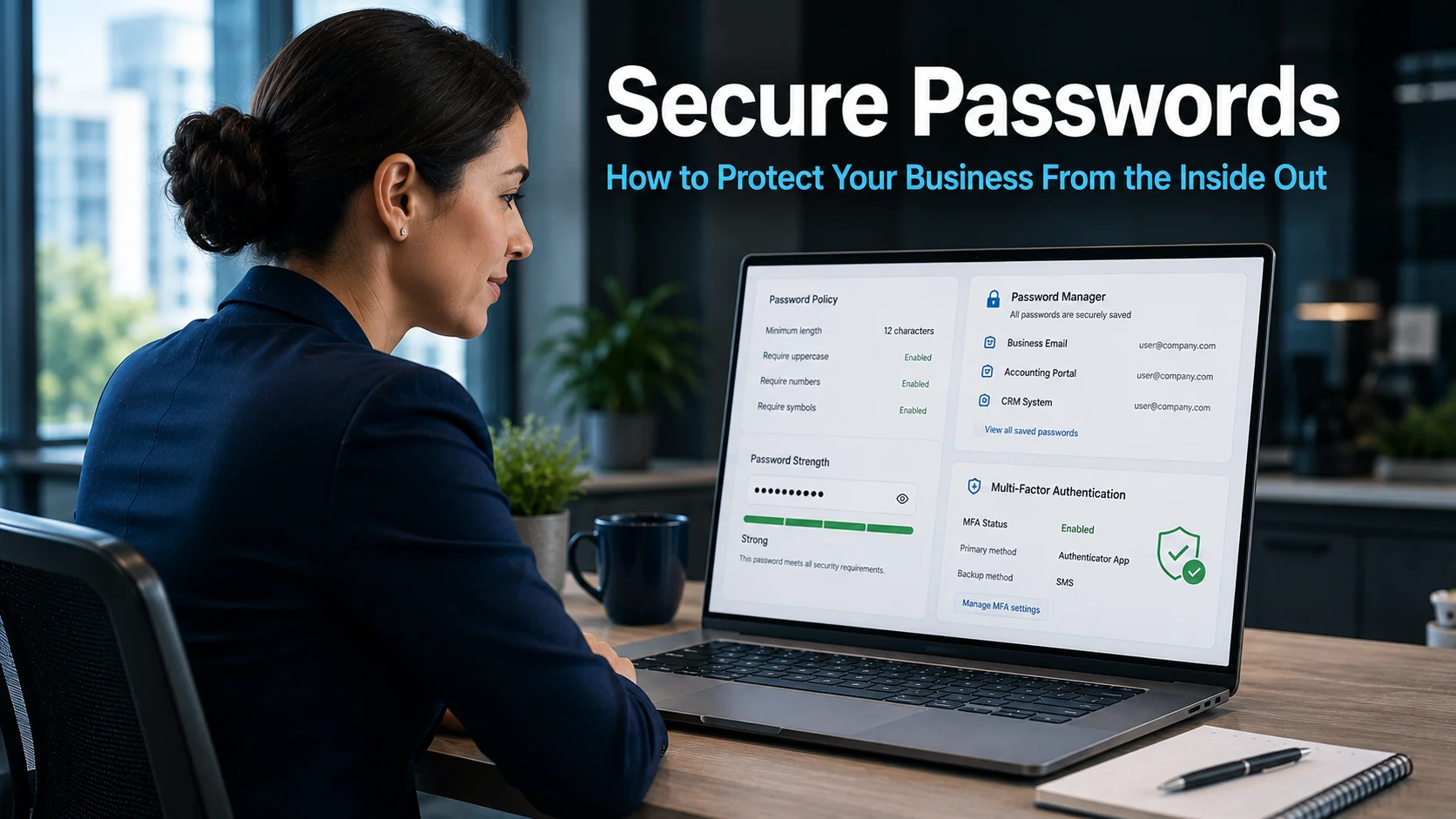
Secure Passwords: How to Protect Your Business From the Inside Out
Secure passwords are the foundation of any business security strategy, yet they remain one of the most frequently neglected areas of protection. Cyber criminals use automated tools capable of testing millions of password combinations every second. A password that feels perfectly adequate to a staff member can be cracked almost instantly. For businesses across Sussex…
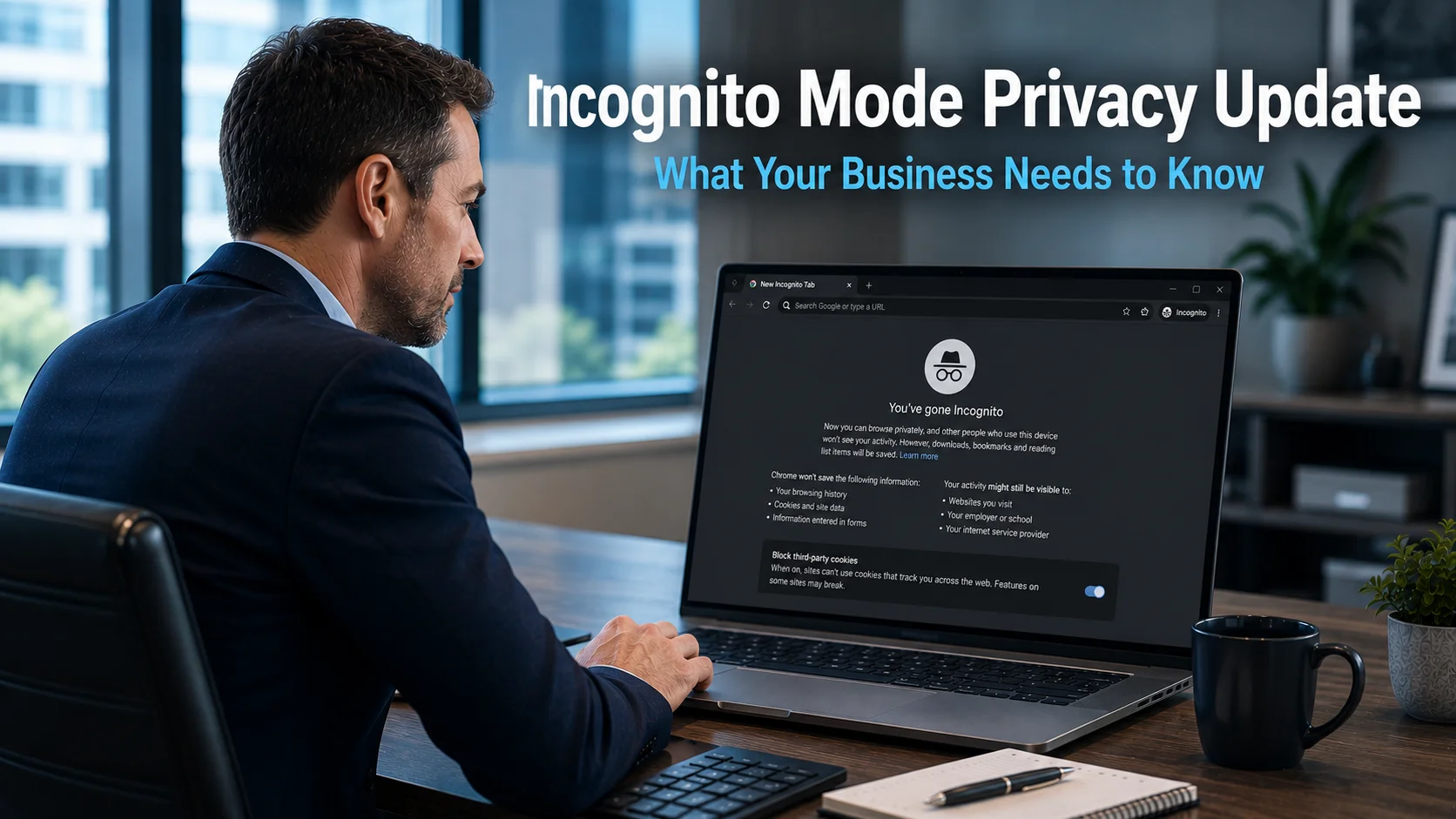
Incognito Mode Privacy Update: What Your Business Needs to Know
Incognito mode privacy has long been misunderstood. Many business users assume that browsing in Chrome’s Incognito mode means their activity is completely hidden. The reality is more nuanced, and a recent update from Microsoft has made the experience meaningfully more private in ways that are relevant for anyone handling sensitive business information. What Incognito Mode…
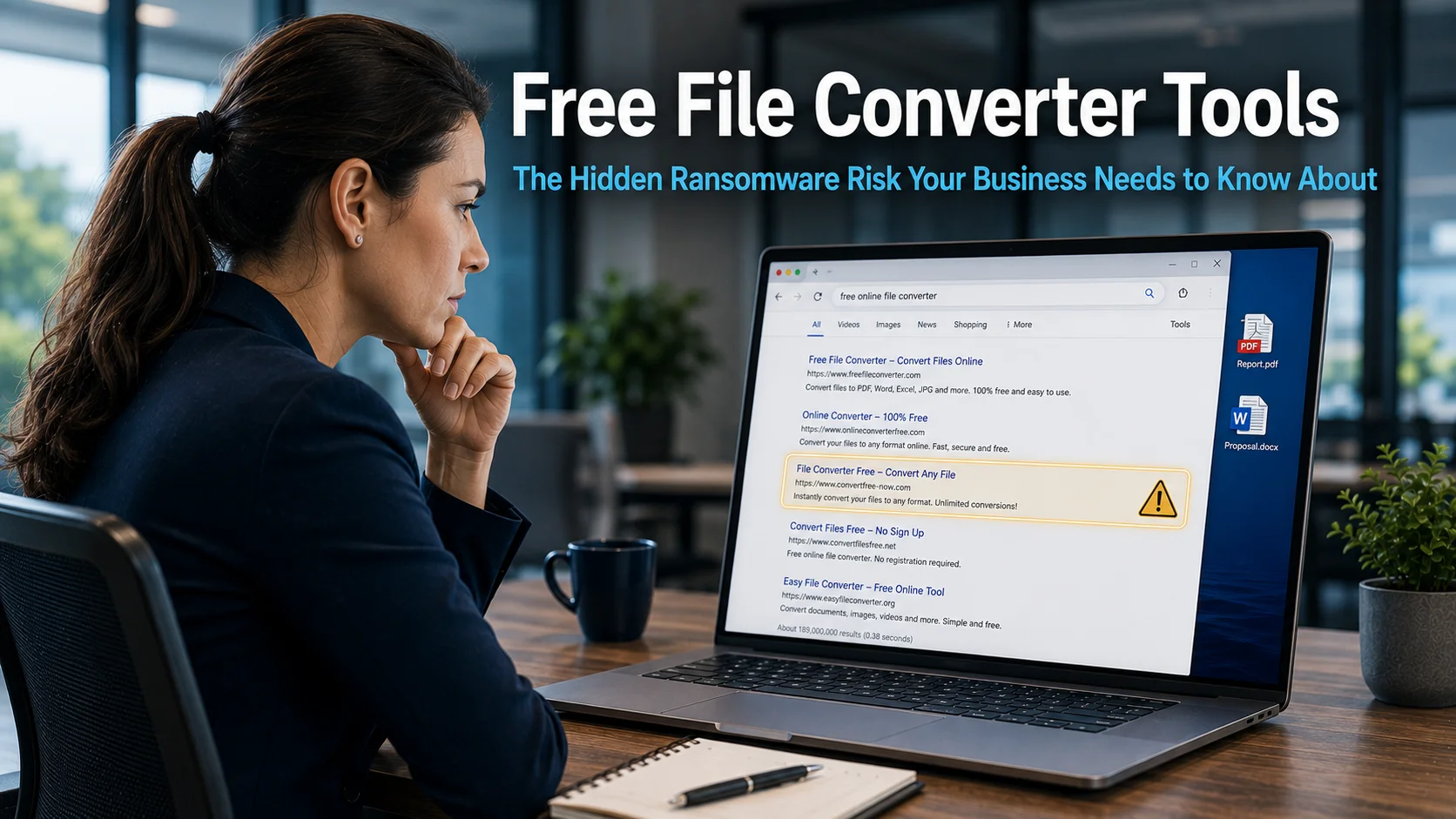
Free File Converter Tools: The Hidden Ransomware Risk Your Business Needs to Know About
Free file converter tools are something most business users have turned to at some point. You need a Word document converted to a PDF, or a collection of images bundled into a single file. A quick search throws up dozens of free websites offering to do it instantly. It feels harmless. However, the FBI has…
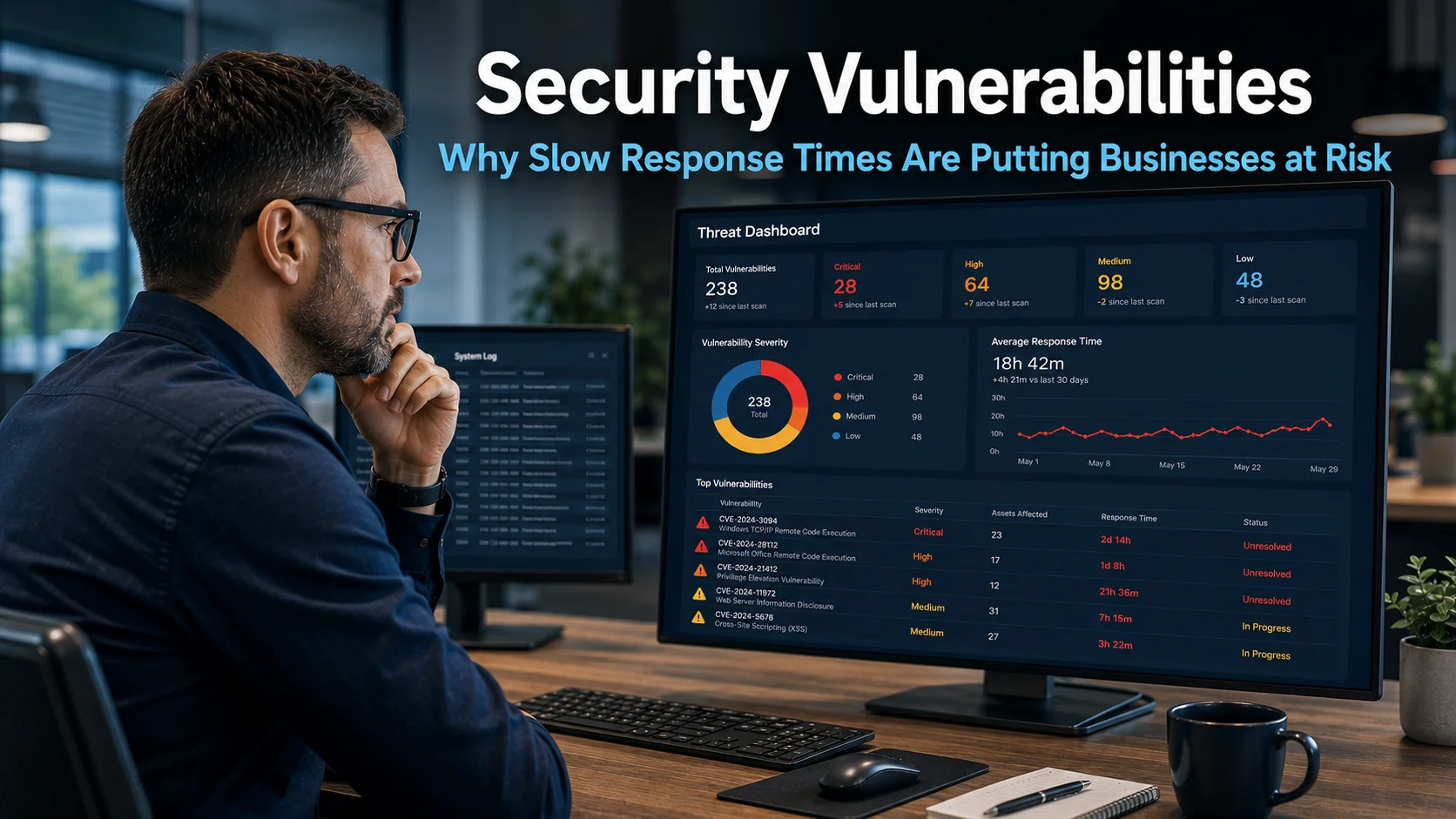
Security Vulnerabilities: Why Slow Response Times Are Putting Businesses at Risk
Security vulnerabilities sit at the heart of most successful cyber attacks on businesses. A vulnerability is any weakness in your systems that an attacker can exploit, such as outdated software, misconfigured settings, or an unpatched application. Most businesses have security tools that flag these weaknesses when they appear. The problem is what happens next. Research…
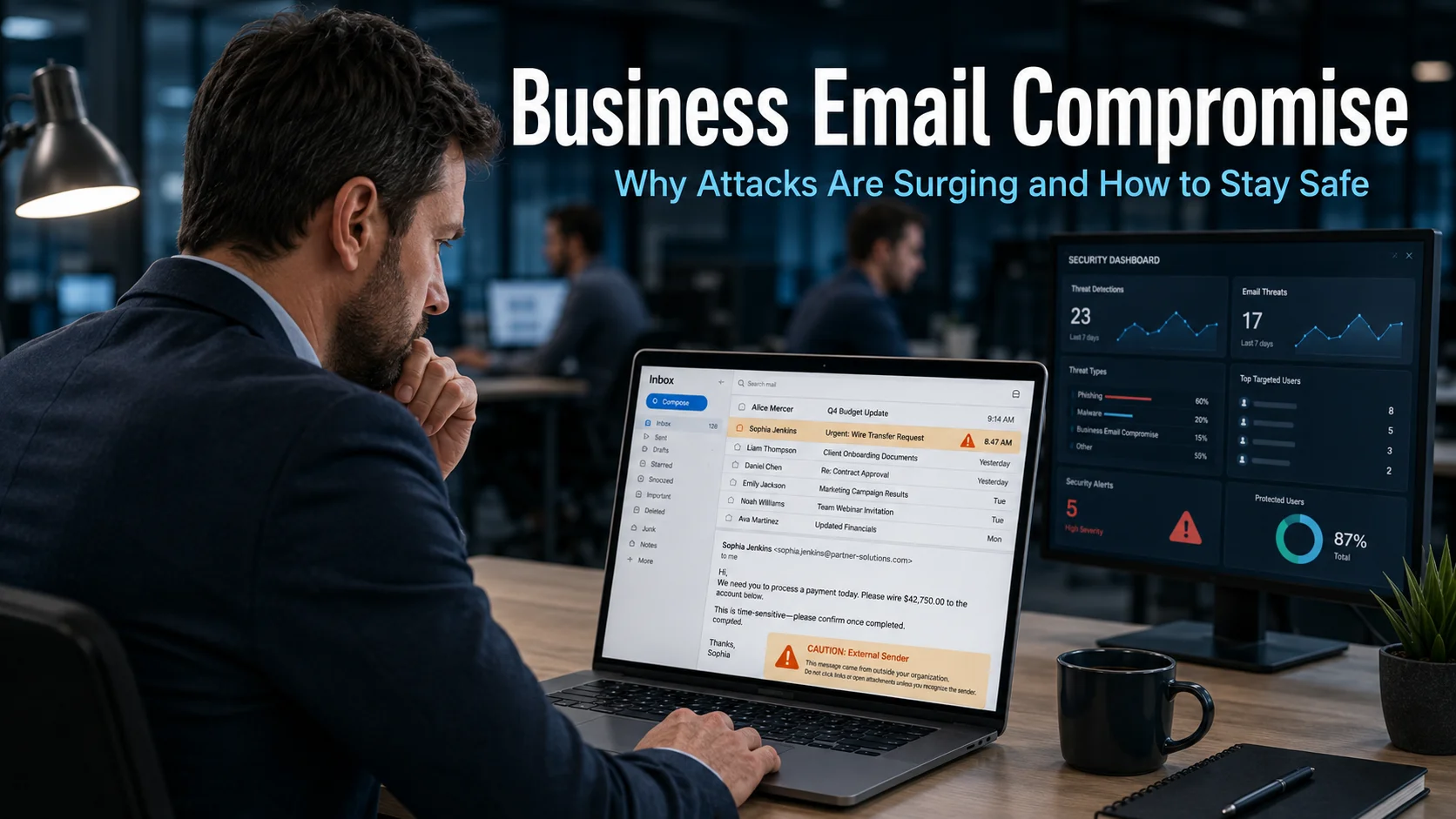
Business Email Compromise: Why Email Attacks Are Surging and How to Stay Safe
Email sits at the heart of almost every business. It connects you to customers, suppliers, and your team. That is precisely why it has become the primary target for cyber criminals. Business email compromise, commonly referred to as BEC, is now the most widespread and damaging email threat facing businesses, and the numbers show it…
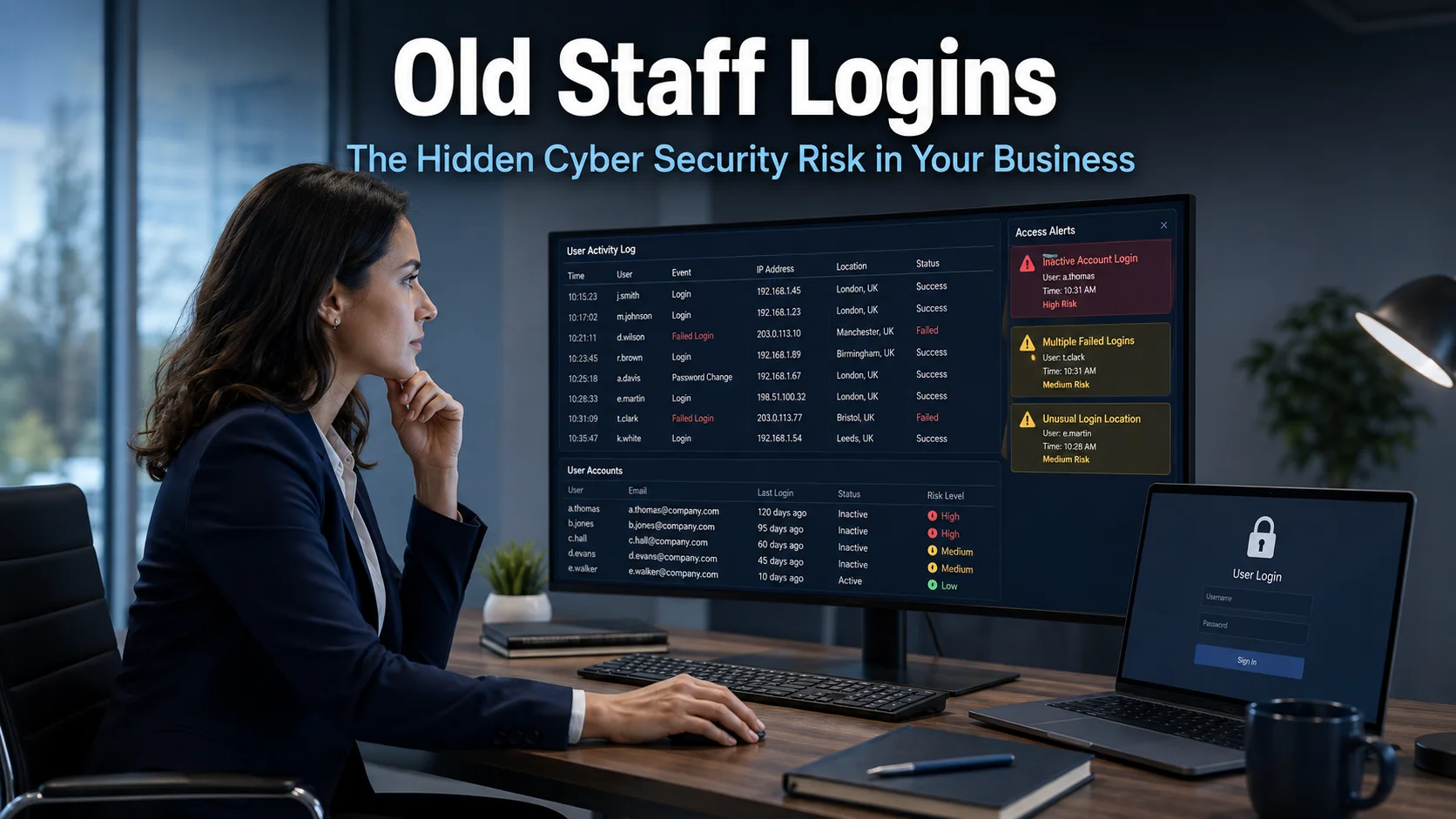
Old Staff Logins: The Hidden Cyber Security Risk in Your Business
When a member of staff leaves your business, there is a lot to think about. Handovers, replacing the role, redistributing workload. In the midst of it all, one small but important task often gets pushed to the bottom of the list: removing their access to your systems. Old staff logins represent a genuine cyber security…
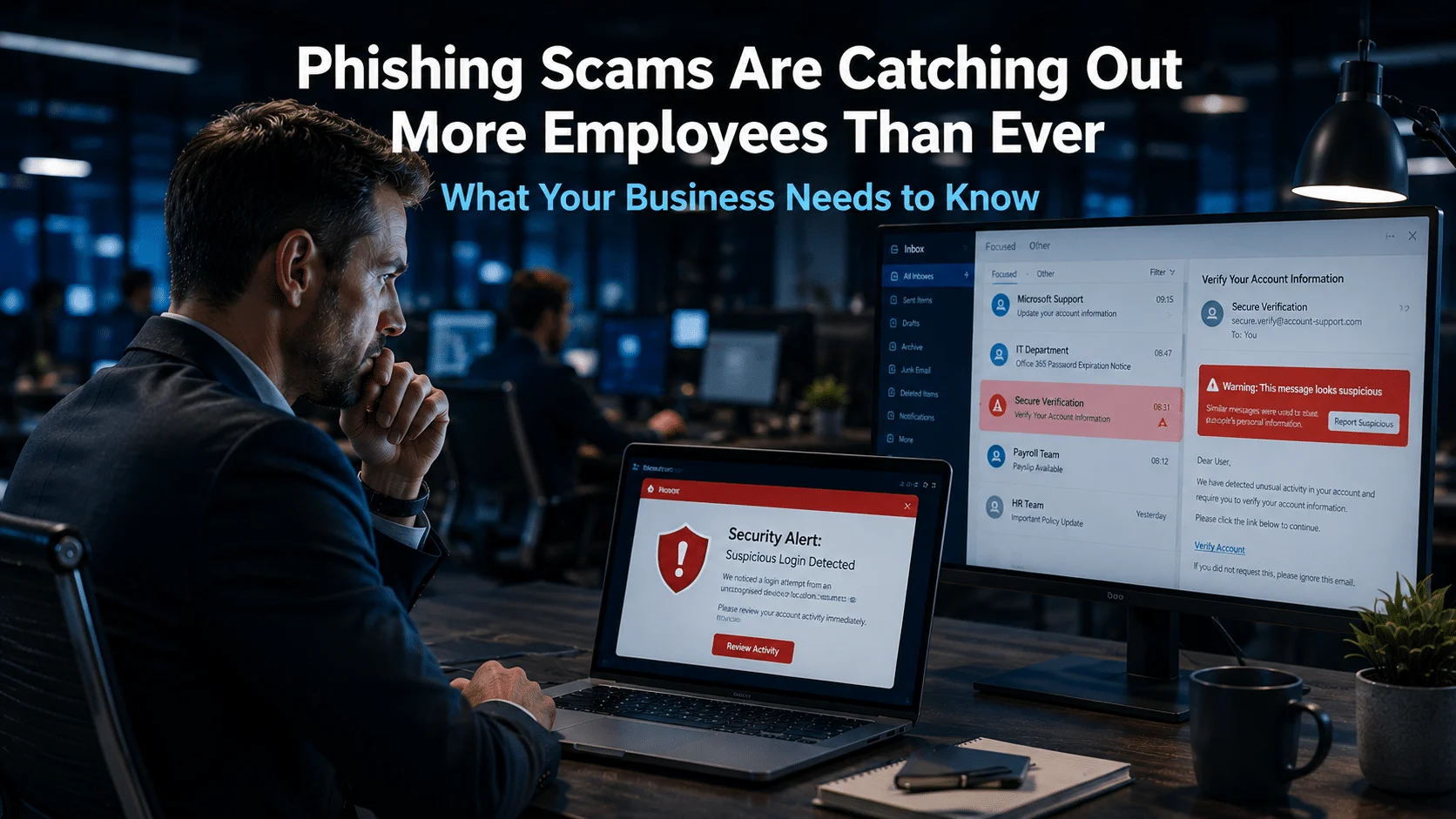
Phishing Scams Are Catching Out More Employees Than Ever Before
Phishing scams are no longer just suspicious emails. Cyber criminals have expanded their tactics, and employees are clicking on harmful links at an alarming rate. This article explains why phishing attacks are harder to spot than ever, and what practical steps business owners can take to protect their teams and their data.
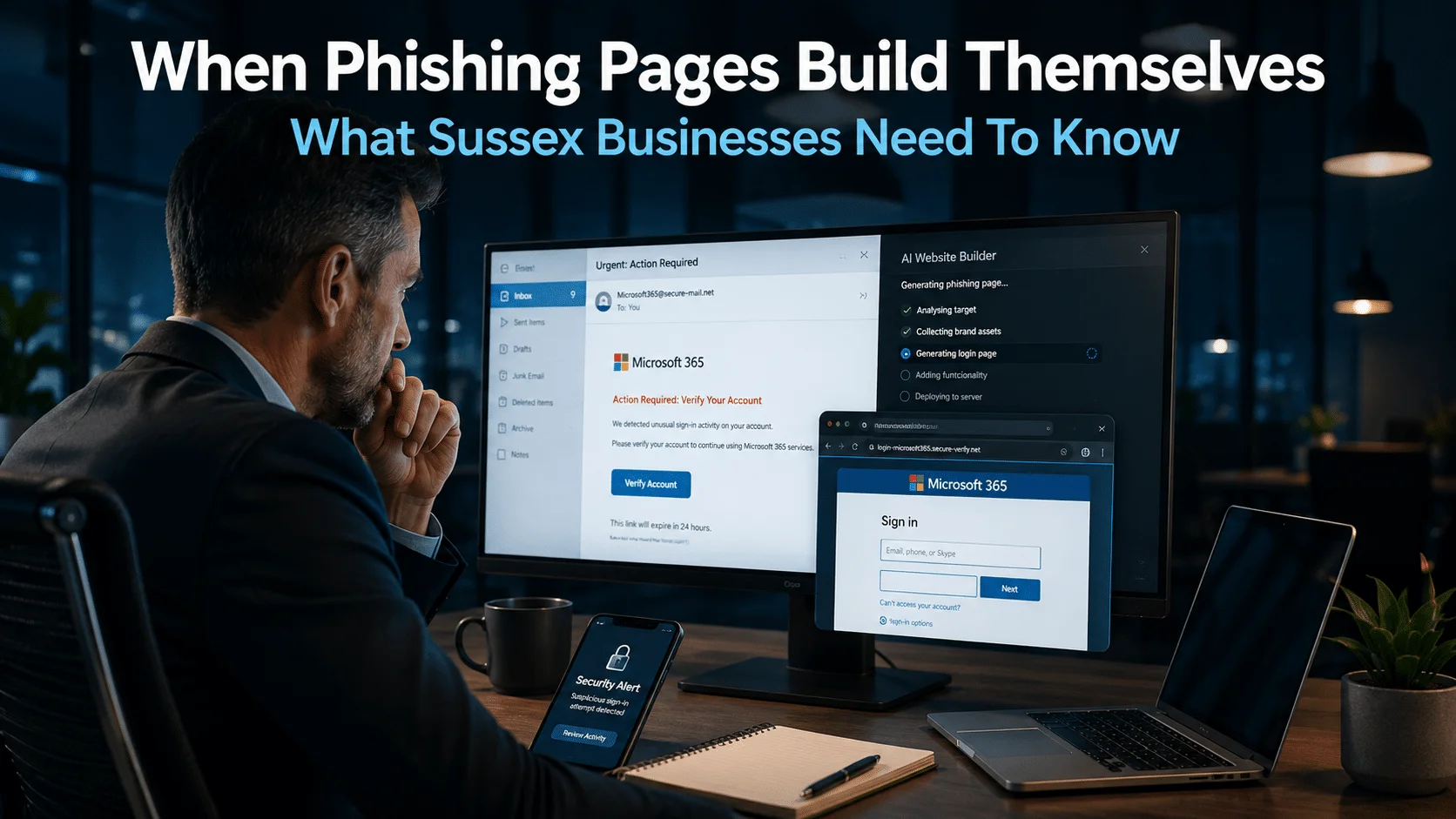
When phishing pages build themselves: what Sussex businesses need to know
Ask most business owners how to spot a phishing email and you’ll get a familiar answer: clumsy spelling, an odd sender address, a logo that’s slightly off. For years that advice has held up reasonably well. It’s becoming less reliable by the month. Across Eastbourne, Hastings, Crawley, Worthing and the rest of Sussex, plenty…
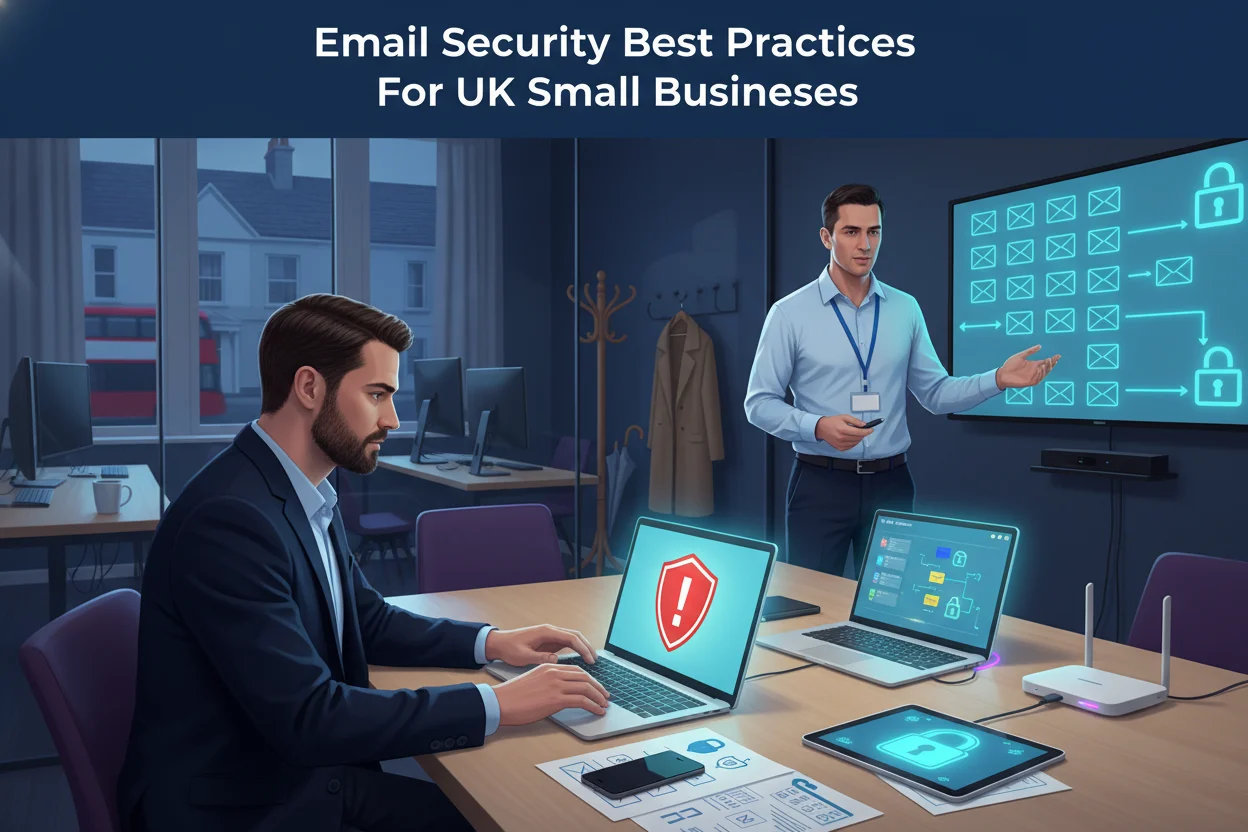
Email security best practices for UK small businesses
This article explains practical email security best practices for UK small businesses, with clear steps to reduce phishing, spoofing and data loss risks.
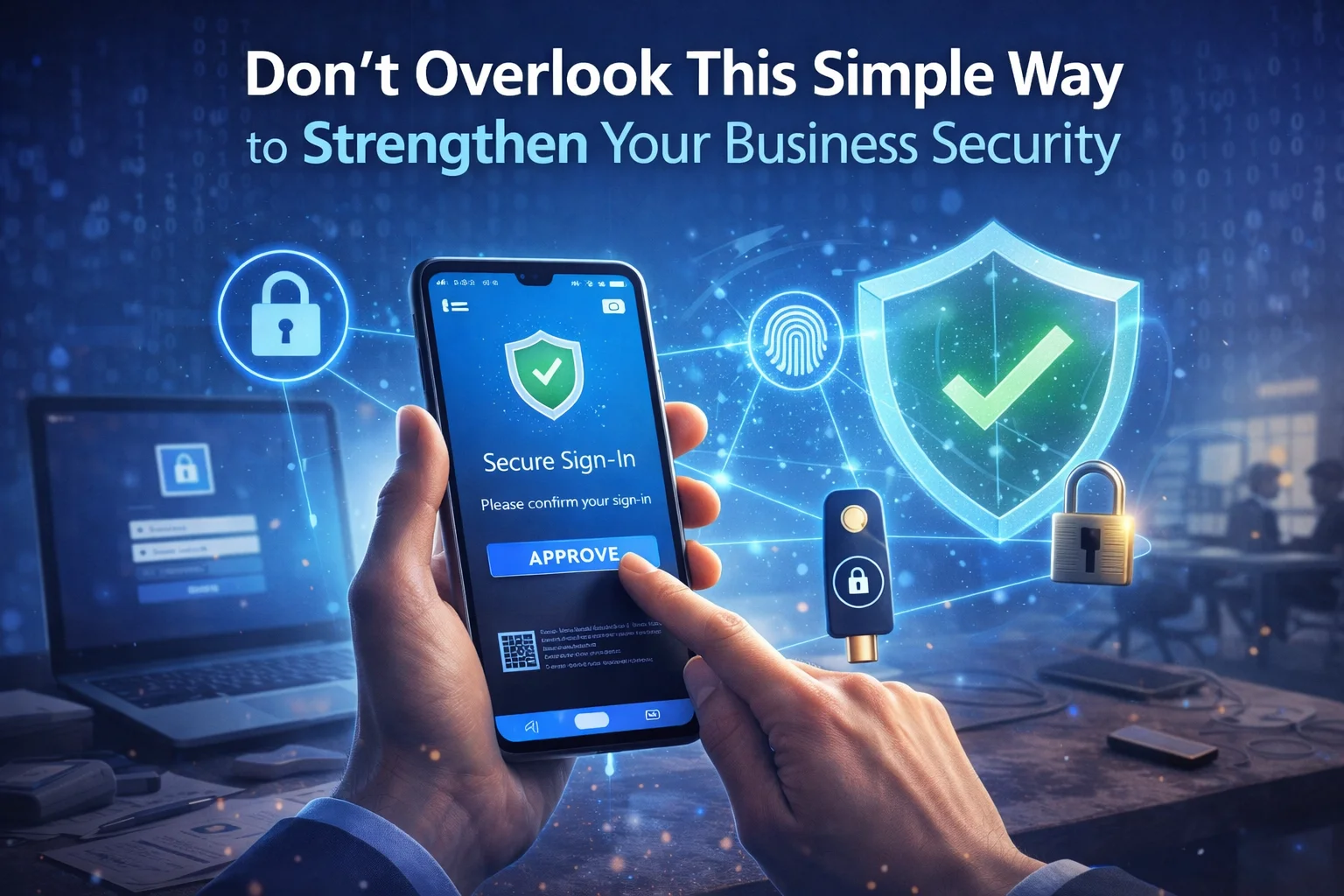
Don’t Overlook This Simple Way to Strengthen Your Business Security
Microsoft recently announced that all sign-ins to Azure will soon require multi-factor authentication, often called MFA. While that change specifically applies to Azure users, the message behind it is relevant to every business. Multi-factor authentication is one of the most straightforward and effective ways to protect your systems, accounts, and business data. What is multi-factor…
What Every Small Business Should Know About Phishing
Phishing remains one of the biggest cybersecurity threats facing small businesses today. It’s not just about suspicious emails anymore, cybercriminals now use convincing messages that appear to come from trusted suppliers, banks, or even your own staff. Their goal is simple: to trick someone into clicking a link, sharing credentials, or transferring money. Every business,…
How to Build a Security-First Culture That Empowers Your Hybrid Workforce
Imagine a workplace where every employee is vigilant against cyber threats and where security isn’t just a protocol but a mindset. In the era of hybrid work, achieving this vision is not just ideal — it’s a necessity. At My Tech Team, we understand that implementing security controls and tools is crucial, but the true…